
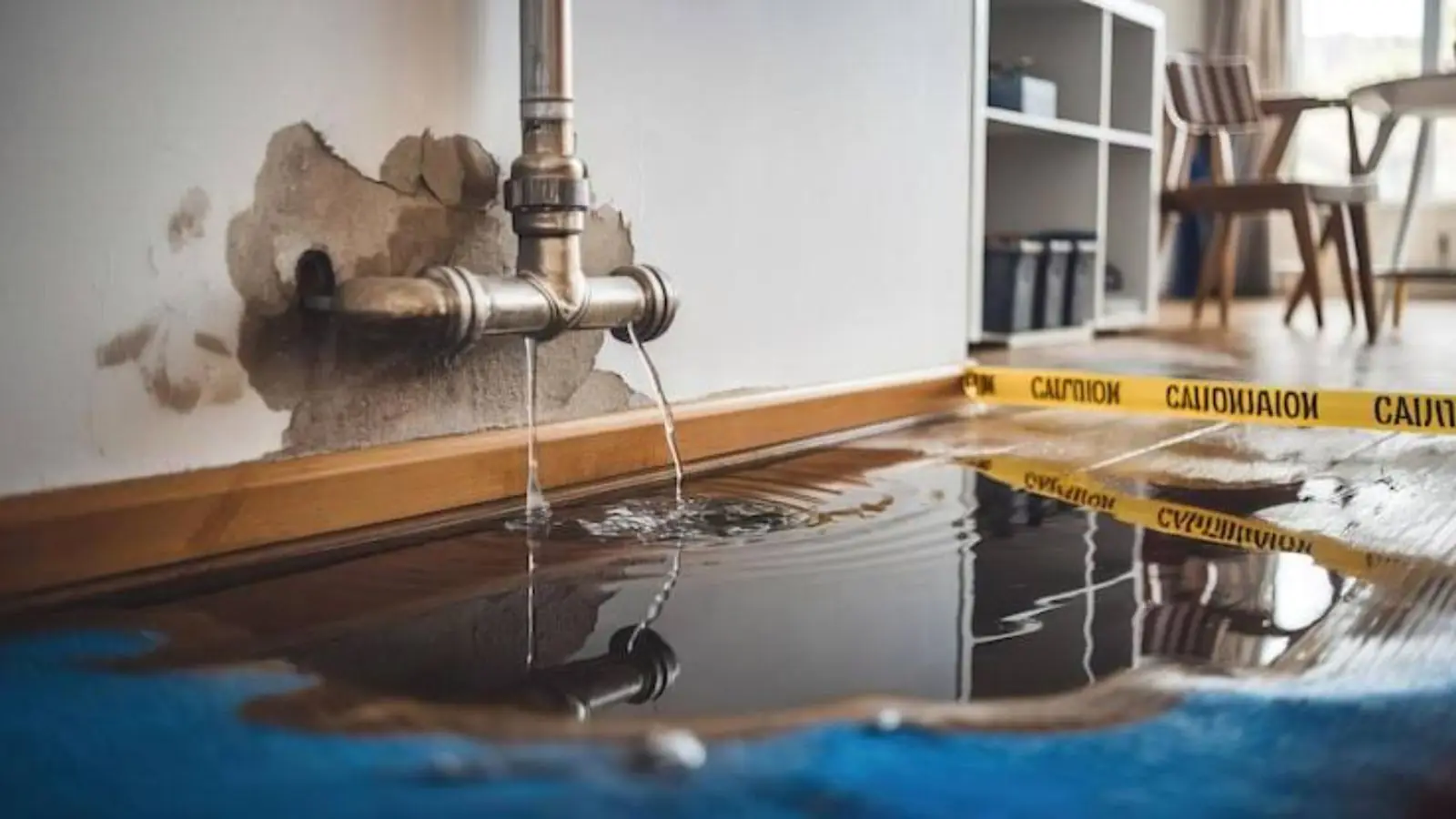
What a burst pipe in the wall does to a house
A burst pipe in the wall in Moorpark usually announces itself with a hiss, a stain on the drywall or a hot spot on the floor, and the first thing to know is that the leak does not stop on its own. A half-inch supply line under normal household pressure can fill a wall cavity and run into the next room in minutes.
Supply water is Category 1 at the start. That is the best case for salvage, but it moves down the wall into the insulation, along the bottom plate and under the baseboards, so the stain you see is the edge of the problem.
The first 15 minutes, in order
Find the nearest shutoff and close it
Start at the fixture stop if the burst is at a sink or toilet. If the pipe is in the wall and unknown, go to the home main valve, often at the front of the house or the garage. Turn it clockwise until it stops. If it will not budge, go to step two.
Use the street meter shutoff only if you must
The meter box at the curb belongs to the water district, and its valve is not yours to operate in the way your main is. If the home main fails and water is still running, the district can close it. Ask the district what you may do.
Open a low faucet and flush a toilet
With the supply off, open the lowest tap in the house to drain pressure and let the pipe empty. Do not run a hot tap if the water heater has lost its supply.
Make power safe
If water is dripping from a ceiling, light fixture or outlet, do not touch it. Cut breakers only if the panel is dry and you can reach it without standing in water. Call the utility or 911 for any sign of electrical danger.
Photograph before you move anything
Capture the wall, the floor, the stain and the broken pipe if visible. Move small items off wet floors and lift furniture legs onto foil or blocks.
Call a restoration crew
Dispatch is 24/7. Describe where the water is, whether the pipe is off, and whether the water heater is running. A plumber is a separate call, and the pipe still needs to be repaired by one.
Water in the wall right now?
Dispatch is open 24/7 and the job is explained and priced up front.
Moorpark water supply and your shutoff
Ventura County Waterworks District No. 1 serves the city of Moorpark and contiguous unincorporated areas to the north and west, according to the county Public Works Agency. It normally gets about 80 percent of its supply from the State Water Project through the Metropolitan Water District of Southern California and Calleguas Municipal Water District.
The rest comes from five local wells the District owns and operates. Your service comes off that system, so questions about the meter box belong with the District, not a neighbor or a plumber.
The county Public Works customer service line is listed on its website as 805-654-2018, Monday through Friday, 8:00 a.m. to 5:00 p.m. The page does not list an after-hours number, so look that up before you need it. Keep the number with your shutoff tag.
The California Department of Insurance tells policyholders to make temporary repairs to prevent further damage, since a policy may not cover ensuing damage if you do not take reasonable steps. Closing the water is the first temporary repair. Keep a log of calls and your receipts.
Water heater, drains and the little things people miss
With the main closed, the water heater is cut off too, and an electric heater with a drained tank can damage its elements if it keeps running. Switch off an electric heater at its breaker, or set a gas heater to the pilot or vacation setting as its label directs. A tank that still holds water is a useful emergency supply, so do not drain it unless the leak is on that line.
If water has gone into floor drains or a basement-style sump, remember that an overflowing drain can bring in sewage. That is Category 3 and needs different handling, so keep people and pets out and tell the crew when you call.
What a restorer does behind the wall
The visible stain is a guess. Crews map moisture with a pin or pinless meter, then scan with a infrared camera, which shows cool, wet areas behind paint. They check the wall above and below the stain, the baseboard, the floor edge and the room next door.
A closed wall dries slowly because air cannot reach the cavity. Crews drill small weep holes or lift baseboards to push dry air in with air movers and an LGR dehumidifier, and they place a moisture meter reading on every wall they track each day.
- Moisture map in the first visit, then readings at each return.
- Flood cuts when insulation is soaked or drywall will not dry.
- Drying equipment in the room, with readings logged each day.
- A written scope covering what comes out and what the rebuild contractor does.
Flood cut or leave it closed: an honest trade-off
A flood cut removes drywall in a clean horizontal line, a safe margin above the highest wet reading, so the cavity is open for drying. It costs repair work later, and it is the right call when insulation is saturated or the drywall has swollen. If the wall is small and the readings fall fast, drilling and drying can spare the paint.
Wet insulation and soft drywall that stay closed up give mold the damp, dark space it needs. Ask the crew why they are cutting or not cutting, and ask to see the meter readings. The decision should come from the numbers.
Know your shutoff before the day you need it
Find your main valve this weekend. Test that it turns, tag it and show everyone in the house. Locate the meter box at the curb and ask the district what the box contains, who may open it and whether a customer-side valve is installed. Also ask your plumber about pressure.
If you live in Thousand Oaks or Simi Valley, your utility will differ from Moorpark, so ask that utility the same questions. Once the pipe is off, see water mitigation for how drying works, or emergency water removal if water is still standing.
Questions readers ask
The meter at the street is the water district's equipment, so contact Ventura County Waterworks District No. 1 and ask whether they can close it. The county Public Works customer service line is on its website. If water is endangering anyone or touching electrical equipment, call 911 first.
Stop the water, then call both. The plumber repairs the pipe, and the restoration crew dries the structure and removes what cannot be saved. Neither replaces the other.
Many policies respond to a sudden failure and push back on a slow one. Check your policy, ask your insurer, photograph the damage and keep a log of calls. The claim decision belongs to the insurer.
A small inspection hole is fine if the power is off, but a large cut can hit wiring or spread contaminated insulation. A moisture meter and thermal camera reduce the guesswork before you open anything.
Yes. The crew walks you through scope and cost first, and the crew walks you through the drying plan and flood cuts.