
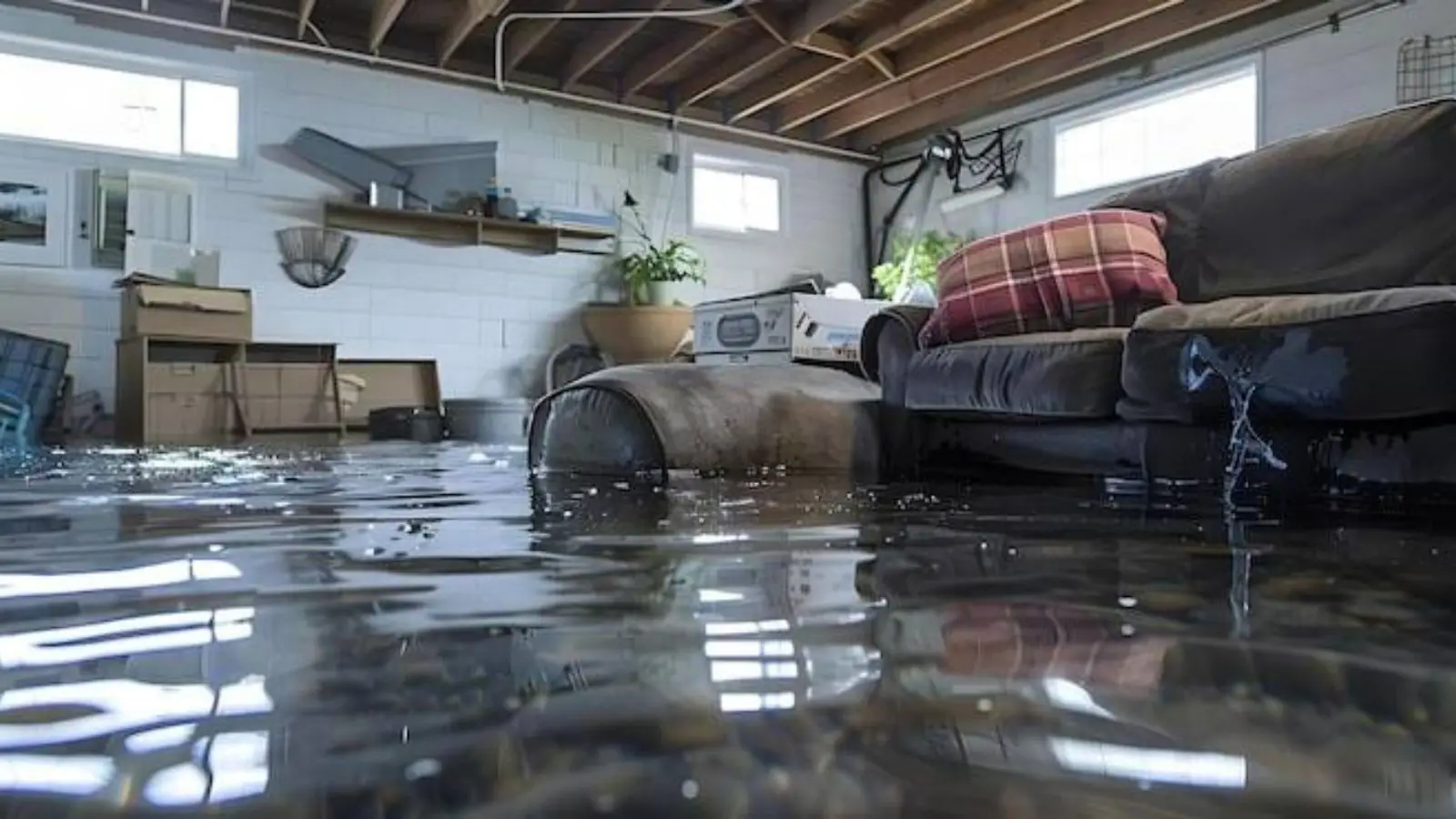
Three ways water gets into a Simi Valley home
Water damage restoration in Simi Valley, CA usually begins with one of three problems. A supply line or water heater fails inside the house, a drain backs up, or storm runoff reaches the structure. Each one calls for a different response, and the first question we ask is where the water came from. Crews are dispatched from Moorpark, about 7 miles west, and dispatch runs around the clock.
Restoration means stopping the spread, pulling standing water with extraction units, then drying framing, subfloor and drywall with air movers and LGR dehumidifiers until a moisture meter reads dry. It is not plumbing, roofing or waterproofing. The broken part still needs a licensed trade, and we will say so plainly.
When water is spreading in Simi Valley
If water is moving across a floor right now, close the main water valve first. Then kill power to the wet areas only when the box is reachable on dry ground, lift valuables off the ground, and keep people and pets out of anything that came from a drain. Our 24/7 line is open at night and on weekends, and same-day response is offered when crews are available.
Simi Valley splits the first phone call. If the water is coming from the street, the meter or the main on the utility side, the City Public Works emergency after-hours hotline at 805-504-2708 handles city-side problems. Golden State Water customers should use the emergency number on their own bill. If the damage is inside the building, call us for emergency water removal.
Sewage or electrical risk
If sewage is coming up a floor drain, stay out of it and keep children and pets away. If water has reached outlets, a panel or an appliance, do not touch anything wet. Call 911 or the electric utility before you call us.
If water is still spreading in Simi Valley: your first steps
Stop the source
Close the main water valve where the line enters the house or at the meter box. If the leak is a single fixture, use the shutoff under the sink or behind the toilet.
Power down wet areas
Flip the breakers for wet rooms only when you can get to the box from a dry floor. If water is near outlets and you cannot reach the panel dry, call the electric utility first.
Lift what you can
Move rugs, electronics, books and boxes onto furniture or counters. Pull up area rugs, because wet dye and backing stain the floor underneath.
Keep people and pets clear
Water from a drain, toilet or outdoor flooding may be Category 3. Keep children and animals out of it and do not wade through it barefoot.
Call the right line
City-side main or street problem: call the City Public Works hotline. Damage inside the building: call our 24/7 line and describe where the water came from.
Which water is it? Sorting damage by category
The source decides the plan. Clean supply water that is dried fast is a different job from a backed-up sewer line, even if both leave the same puddle. ANSI/IICRC S500 is the published industry standard that defines these categories, and you can ask any company whether its crews work to it.
| Source in a Simi Valley home | Category | What usually happens |
|---|---|---|
| Broken supply line, failed water heater, ice maker line | Category 1 | Extract, set air movers and LGR dehumidifiers, check walls with meter readings and an infrared scan |
| Washing machine or dishwasher discharge, toilet overflow with urine only | Category 2 | Extract, clean and apply antimicrobial per label, remove porous materials such as wet carpet pad |
| Sewage backup, creek or storm flood water | Category 3 | Contain, remove affected porous materials, disinfect, dry and verify before any rebuild |
Water still on the floor?
Talk to a dispatcher now. The crew walks you through scope and cost first.
Two water suppliers, one city
Two suppliers serve Simi Valley. City of Simi Valley and Ventura County Waterworks District No. 8 serves about 60 percent of the city, with the City Council acting as its board, and Golden State Water Company serves the remaining 40 percent. The main source for the District is Calleguas Municipal Water District, plus two wells in Tapo Canyon that feed the Tapo Canyon Water Treatment Plant.
That split matters when a line fails. The shutoff at your house works the same either way, but the company that owns the meter and the street main depends on your address. Keep a recent bill where you can find it, and note the supplier name before an emergency, not during one.
What the 2024 flood map change does and does not mean
A FEMA Letter of Map Revision took effect October 22, 2024. It revised flood hazard information for the Arroyo Simi Channel (from upstream of First Street to downstream of Royal Avenue), Dry Canyon Channel, Erringer Drain, Runkle Canyon Channel and Tapo Canyon Creek Channel. According to the City, 1,903 properties came out of the Special Flood Hazard Area and 53 were newly added.
Check the current FEMA flood map for your address using the National Flood Hazard Layer viewer, and ask your insurer or lender what it means for you. The City also notes that nearly 25 percent of FEMA flood claims come from outside the high-risk zone. Map status never stops a water heater from splitting or a toilet supply line from failing, so interior leaks stay your risk either way.
Citywide remapping continues separately. The City describes its floodplain remapping project as an estimated four-year effort that has studied detailed models for the Arroyo Simi, Bus Canyon, Dry Canyon Las Llajas, North Simi Drain, Sycamore Canyon and Tapo Canyon watersheds.
How we dry a Simi Valley house
Find and stop
Trace the source, close the valve, and map wet areas with a moisture meter plus an infrared camera.
Extract
Truck-mounted or portable extraction units remove standing water from hard floors, carpet and pad.
Open and dry
Flood cuts, pulled baseboard and lifted flooring let air movers and LGR dehumidifiers reach wet framing.
Verify
Daily readings continue until the materials reach their dry standard, then rebuild scope is discussed.
What we lead with in Simi Valley
For Simi Valley we lead with flood damage restoration when storm runoff or sewage is involved, and with water mitigation when a leak has soaked walls and subfloor. After the structure is dry, water damage cleanup covers contents, odors and surface cleaning, so the house is ready for repair.
We also serve neighbors on either side of Simi Valley. See our pages for Thousand Oaks and Camarillo in the same county.
Insurance and your paper trail
Sudden and accidental water damage, such as a burst pipe, is often covered. Gradual leaks and neglect often are not, and flood damage is usually excluded and needs separate flood coverage. Read your policy and confirm details with your carrier.
The California Department of Insurance advises making temporary repairs to prevent more damage and keeping a log of calls and copies of correspondence. Photograph everything before it is moved.
Simi Valley on the map
Questions from Simi Valley homeowners
Yes. Dispatch runs 24/7, including nights, weekends and holidays, and a crew can often be sent the same day. Call, describe where the water is coming from, and the dispatcher will tell you what to do while you wait.
Yes. Both Simi Valley ZIP codes, 93063 and 93065, are covered, whether your home is in an older neighborhood near the Arroyo Simi or on a hillside street farther out. Tell the dispatcher your street address and we will confirm.
It depends on where the water starts. If it comes from the street, the meter or the main, call the City Public Works hotline at 805-504-2708, or your own supplier if you are a Golden State Water customer. If water is inside the building, call us.
Not necessarily. Whether a lender requires flood insurance is separate from whether your home can flood. Check the current FEMA map for your address and ask your insurer.
Yes. We describe what will be removed, how drying is expected to go and which factors set the price. We will not name a number before knowing the water category, the affected area and the materials.
A burst pipe or similar sudden event is often covered. Flood damage is usually excluded and needs a separate policy. Check your policy and ask your insurer before you file.