
Floodwater Is Spreading: What To Do Right Now
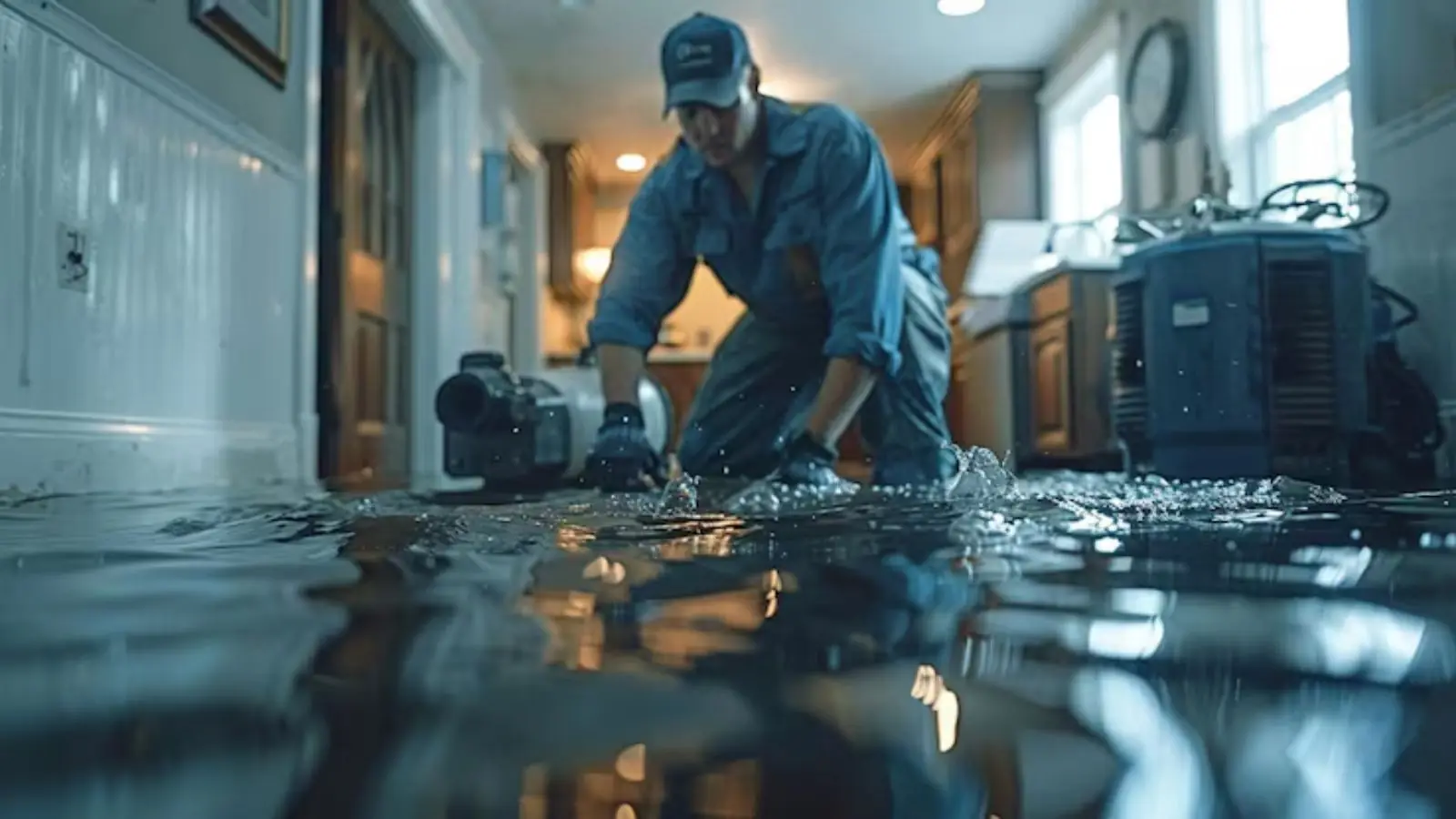
If floodwater is coming into your Moorpark, CA home, treat it as urgent, and know that our 24/7 dispatch line is open. Do not wade through it. Floodwater can carry debris and contamination, and the water can be electrically charged if power lines or outlets are involved. If you can do it from dry ground, shut off the main water valve and lift valuables, then call.
Flood damage restoration is the removal of Category 2 and 3 water, the tear-out of materials that cannot be cleaned, cleaning and disinfection, and structural drying. It is more cautious than a clean-water job because the water itself is the hazard. Same-day response is available when a crew is open.
Stay out of moving water and away from electricity
The National Weather Service warns that six inches of fast-moving water can knock over an adult and 18 to 24 inches can carry away most vehicles, including large SUVs. Do not walk or drive through it. Do not touch electrical equipment if it is wet or if you are standing in water, and call 911 or the utility BEFORE calling a restoration crew if you smell gas or see downed lines.
Why Moorpark Homeowners Should Check the Flood Map
The City of Moorpark lists two FEMA Letters of Map Revision that changed the city's Flood Insurance Rate Maps. One is Case No. 10-09-2904P for the Arroyo Simi and the other is Case No. 12-09-0985P for the Walnut Canyon Drain. Maps get revised, so a zone you heard about years ago may not be current.
Whether you live in Old Town Moorpark north of SR 118 or in Peach Hill and Mountain Meadows south of the Arroyo Simi, the map for your parcel is what counts. Search your parcel on the FEMA flood map, or ask Moorpark City Hall at 805-517-6200. The FEMA Map Service Center is 1-800-358-9616. Your answer tells you what coverage to ask your insurer about.
Ventura County Public Works advises residents to learn how to get and place sandbags before floodwaters threaten. They can slow water at a door, but they do not replace pumping once water is inside.
Category 2 and 3 Water: What the Label Means
| Water type | What it means | What is done |
|---|---|---|
| Category 2 (gray water) | Significant contamination, such as washing machine or dishwasher overflow | Extraction, removal of carpet pad and soaked porous materials, cleaning, antimicrobial applied per label, then drying |
| Category 3, storm or groundwater | Grossly contaminated, outside water carrying soil and debris | Protective gear, extraction, removal of porous materials, cleaning, structural drying |
| Category 3, sewage | Raw sewage backing up from a drain or toilet | Containment, protective gear, removal of affected materials, disinfection, drying, HEPA air scrubbers if needed |
Basement Flooding Cleanup: If Your Home Has a Basement, Lower Level or Sunken Garage
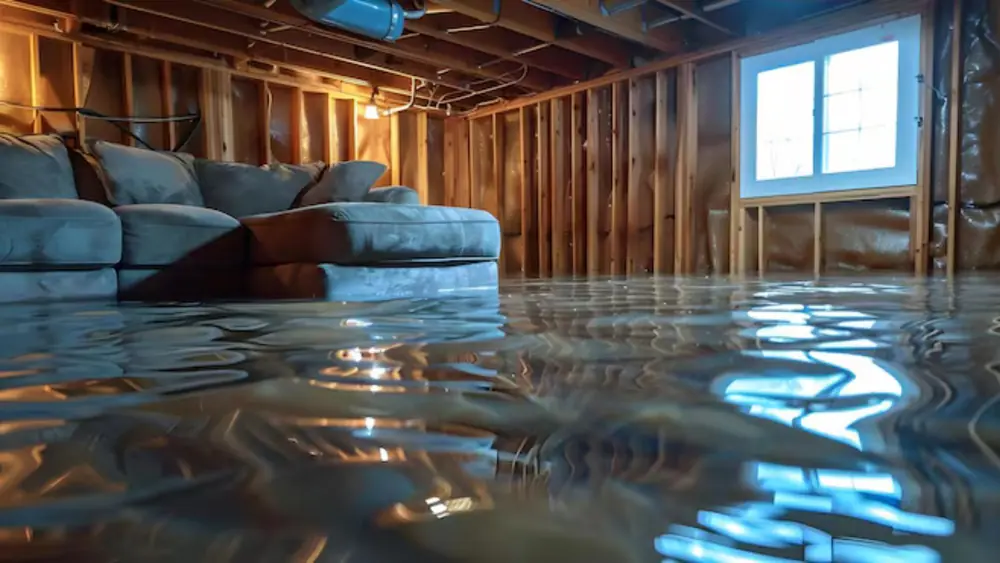
Not every Moorpark home has below-grade space, so this applies only if your home has a basement, lower level or sunken garage. In those spaces, water collects from storm runoff, groundwater or a failed sump, and even a few inches can wick into finished drywall, cabinetry and stored belongings within hours.
The American Red Cross advises pumping a flooded basement gradually, about one-third of the water per day, because draining it all at once can let soil pressure outside push on the walls. A crew uses submersible pumps, then extraction and drying, and removes porous items that touched the water such as carpet, mattresses and insulation.
Be clear on what this work is. Flood damage restoration cleans and dries what the water touched, but it is not waterproofing. If water keeps coming back, you will need a drainage or waterproofing specialist, and ask your city building department what rules apply to changes below grade.
Raw sewage is coming up my floor drain, what do I do?
Sewage in a shower, floor drain or toilet is not a plumbing annoyance. It is Category 3 water, and it needs a different response from a leak. Stay out of the room and keep children and pets away.
Do not use sinks, toilets or the washing machine, since that sends more water down the same line. The blockage may be in your lateral or in the public line, so call a plumber or your sewer provider as well and treat the cleanup as a separate job.
Sewage Backup Cleanup: Safety First, Emergency Steps
A sewage backup is an emergency, and our dispatch is open 24/7. Stay out of the affected area until a crew with protective gear arrives. Do not try to mop it up with household cleaners, because that spreads contamination and puts you in contact with it.
The crew contains the area, sets up negative air machines or HEPA air scrubbers when needed, and wears gloves, boots and respiratory protection. Standing sewage is extracted, and porous materials such as carpet, pad, drywall and insulation that touched it are removed and bagged. Hard surfaces are cleaned with an antimicrobial used as the product label directs, then the structure is dried.
Fixing the blockage is a plumbing job, not a restoration job. Your insurance may cover a backup only with a specific endorsement, so read the policy and confirm with your carrier before the cleanup bills arrive, and take photos before anything is removed.
Sewage safety
Do not touch sewage with bare hands, do not step in it and do not run fans or vacuums that spread it. If the backup has reached outlets or an appliance, cut power only if the panel is dry and call 911 or the utility BEFORE calling us.
What Sets the Price of Flood Cleanup
Flood jobs vary widely, so the job is explained and priced up front.
Water category
Category 3 water adds protective gear, disposal and more thorough cleaning than Category 2.
Affected area
The number of rooms and how far the water traveled decide extraction time and cleaning.
Materials involved
Porous items such as carpet, pad, insulation and low drywall are usually removed, while hard surfaces can be cleaned.
Drying days and equipment
Big floodwater jobs need many air movers and LGR dehumidifiers running several days with daily readings.
Rebuild scope
Replacing floors, drywall and cabinets follows the cleanup and is scoped separately.
Want your real number? Call, describe the water and the rooms, and the dispatcher explains how the scope is set.
Floodwater inside the house?
Dispatch is open 24/7. Same-day response when available, scope and price explained before work starts.
Flood Damage Is Usually Not in a Standard Homeowners Policy
FEMA says homeowners and renters insurance do not typically cover flood damage, and Ventura County Public Works makes the same point. Flood coverage is a separate policy, usually through the National Flood Insurance Program or a private insurer. Most NFIP policies carry a 30-day waiting period, so buying after water arrives does not help that event.
That is why the flood map check matters before a storm. If you have flood coverage, call your insurer first, photograph everything, keep a log of calls, and make temporary repairs that stop further damage, as the California Department of Insurance advises. If you do not, ask your insurer what applies.
Where Crews Dispatch From
The network serves Moorpark and nearby towns, including Fillmore up the valley. If standing water needs pumping before anything else, the same dispatch line covers emergency water removal, and after drying, mold remediation is available if growth appears.
Questions about flood damage restoration in Moorpark
Yes. Dispatch is available 24/7, including nights and weekends, and same-day response is available when a crew is open. Say whether the water is still entering, what it looks like and whether any electrical equipment is wet, and the dispatcher will explain the next step.
Usually not. Standard homeowners policies typically exclude flood, which is why separate flood coverage exists. A sudden pipe break inside the house is a different kind of loss, so tell your insurer exactly what happened and ask how your policy treats it.
The crew lists what is being removed, cleaned and dried, and explains what drives the price, before any work begins. Flood jobs can grow once materials are opened, so ask to be told first when that happens.
Use the FEMA flood map for your address, or ask Moorpark City Hall. The city lists FEMA Letters of Map Revision for the Arroyo Simi and the Walnut Canyon Drain, so rely on the current map.
Category 2 water has significant contamination, while Category 3 is grossly contaminated and includes sewage and floodwater from outside. Both lead to removal of porous materials, and Category 3 calls for stricter protective measures.
No. It cleans and dries what the water touched. It is not waterproofing, grading or drainage work, which is a separate trade.