
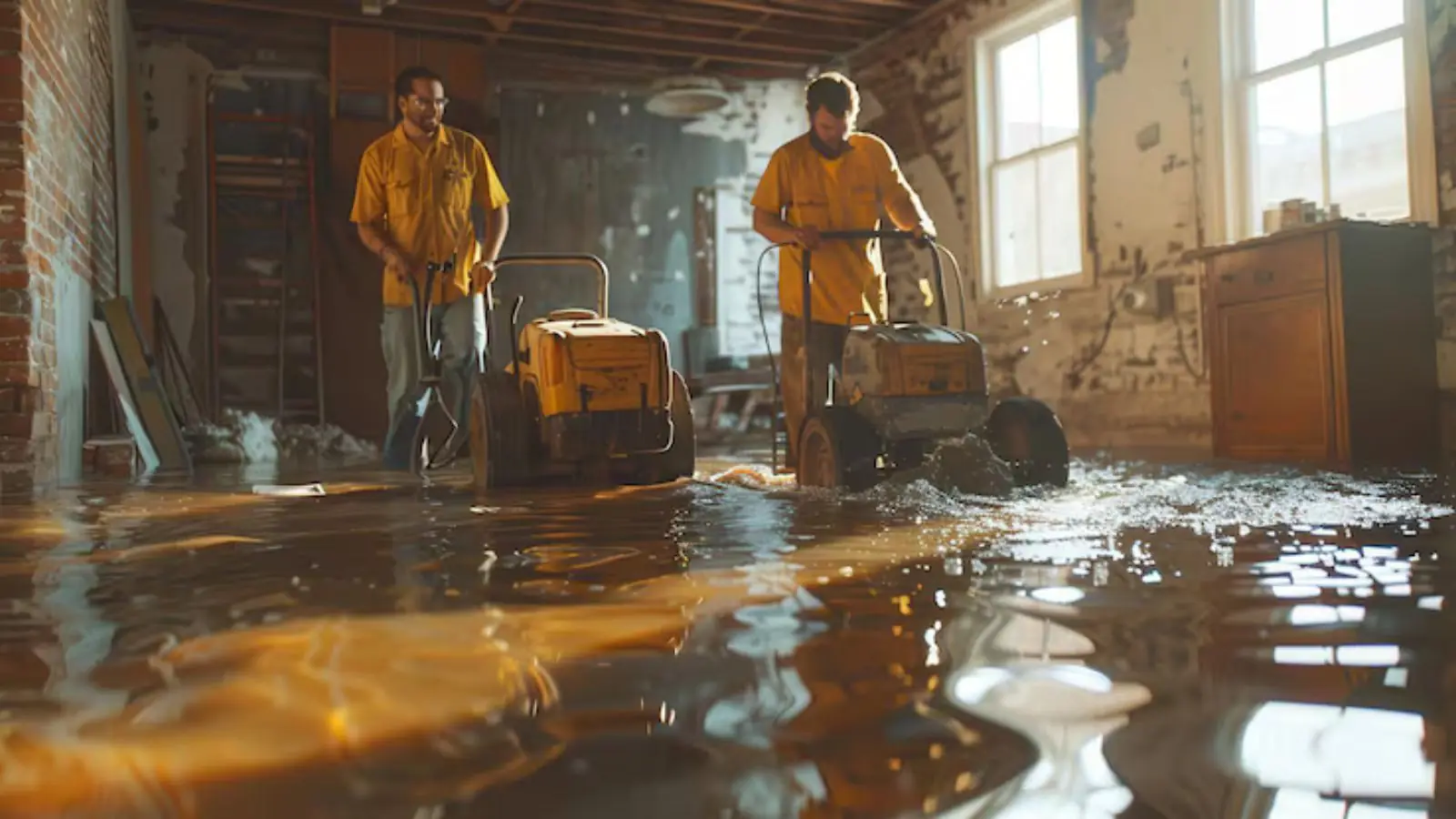
Water in your Moorpark home right now? Start here
Water damage cleanup in Moorpark, CA is urgent work, and the 24/7 dispatch line stays open while you read this. While you wait, stop the source at the main shutoff valve, lift valuables off wet floors, and keep people and pets out of water that came from a drain or toilet. Cut power to wet rooms only if you can reach the panel without stepping in water.
Cleanup is the removal stage. Crews pull out standing water, wet debris and materials that cannot be saved, then sanitize and deodorize what stays. It covers roughly the first 48 hours, before drying and rebuilding. Same-day response is available when crews can be scheduled, and the crew walks you through scope and cost first.
Why cleanups in Moorpark cluster after the rain returns
The city reports about 15.85 inches of rain a year, with January normals near 3.21 inches and July at 0.01. That winter weighting means roofs, window frames and flashing sit dry for months, then get tested all at once. A leak that shows up as a stained ceiling in January often started as a slow drip into insulation, so the wet material you remove can be bigger than the stain suggests.
Older buildings in Old Town Moorpark near High Street hide more behind the wall, such as original plaster and aging drains. Newer homes in Peach Hill and Mountain Meadows, south of the Arroyo Simi, more often see failed washer hoses and upstairs bathroom overflows. Ask the crew what they found behind the baseboard, not only on the floor.
For a burst pipe, you need to know where your shutoff is before the emergency. Ventura County Waterworks District No. 1 serves the city, and the meter is normally near the street. The valve at the house is yours to close. If you cannot stop the flow there, ask your water utility how to shut it off at the meter.
Signs the water is spreading and cleanup cannot wait
- Carpet that squishes underfoot or a pad that stays dark after you blot it.
- Drywall that feels cool, soft or swollen, or paint that bubbles at the bottom edge.
- A sour, swampy or sewer smell that returns after you open the windows.
- Water stains that grow overnight on a ceiling, or a ceiling that sags in the middle.
Any one of these means water has moved past what you can see. A a meter and a thermal camera find the wet edge, often a few feet beyond the stain.
How a cleanup runs, step by step
Stop and survey
The crew confirms the source is off, sets the water category, and maps wet areas with a moisture meter and thermal camera.
Extract the water
Truck-mounted or portable extraction units pull standing water off carpet, tile and subfloor.
Remove what cannot be saved
Soaked pad, swollen drywall, wet insulation and ruined contents are cut out and bagged.
Clean and sanitize
Surfaces that stay are cleaned, then treated with antimicrobial applied per the product label.
Deodorize and hand off
Odor sources are removed and the job moves to drying.
What gets removed and what can be saved
Not every wet material is a loss. What the water carried, how long the material sat in it and whether it is porous decide the outcome. A hardwood floor under clean water may dry in place, but under sewage backup it is a removal job.
| Material | Clean source water (Category 1) | Contaminated water (Category 2 or 3) |
|---|---|---|
| Carpet pad | Often removed because it holds water and dries slowly, carpet may be lifted and dried | Removed and discarded, carpet usually discarded as well |
| Drywall | Often dried in place if caught quickly, cut out if swollen or soft | Cut out above the wet line, framing cleaned |
| Insulation | Wet batts are usually removed, they stay damp and sag | Removed and discarded |
| Baseboards and trim | Often removed to ventilate the wall, then reinstalled if sound | Removed, solid wood may be cleaned, MDF usually discarded |
| Hard contents | Wiped, dried and often returned | Cleaned and sanitized if nonporous, otherwise discarded |
Category 3 is sewage or outside flood water. Category 2 is significantly contaminated, such as a washing machine discharge. Ask which category the crew is treating and why.
Cleaning, antimicrobial treatment and odor
Cleaning removes soil and residue. Antimicrobial treatment is a separate step, applied only where the water category or material calls for it and only as the product label allows. A crew that sprays everything by default is not following the label.
Odor usually means something wet is still in place. Sour smells from pad, a soaked baseboard cavity or damp insulation end when the material is removed, not when it is masked. If a smell returns, call back before the rebuild closes the wall.
Electrical, sewage and standing water: stay out first
Sewage backup and outside flood water are Category 3. They need protective gear, containment and removal of porous materials from the first minute.
Safety before cleanup
If water reached outlets, appliances or the panel, or if there is a gas smell, leave the area and call 911 or your utility before you call anyone else. Cut power only if the box is reachable from a dry spot. Keep people and pets out of sewage and flood water.
What drives the cost of a cleanup
Water category
Category 2 and 3 water raise labor, disposal and protection needs.
Affected area
Square footage and room count set how much extraction and demolition is needed.
Materials involved
Carpet and pad, drywall cuts, insulation and cabinet toe-kicks each change the removal list.
Equipment and days
Extraction units, air movers and dehumidifiers are counted by number and days in place.
Rebuild scope
What comes out now sets the repair list later.
Insurance may cover sudden and accidental damage, but confirm what applies with your insurance company. Want your real number? Call and describe the loss, and the crew will walk you through the price before work starts.
Water still spreading in Moorpark?
Call the 24/7 line now and describe what you see. Same-day response when available.
Document the loss for your insurer before it goes in the dumpster
Photograph and video every wet room before crews remove anything, including the source, the water line on the walls and the labels on damaged items. Keep a written log of calls and copies of what you send and receive, as the California Department of Insurance advises. Make temporary repairs such as a tarp or a closed valve, because policies may not pay for further damage you could have prevented.
Build an itemized list of damaged contents with brand, age and approximate value, and keep damaged items until the adjuster says otherwise. Once the building is clean, the structure still has to be dried, and structural drying starts right behind removal. Rebuilding comes later, on the repair page.
Flood damage is usually excluded from standard homeowner policies and needs separate flood coverage. If your home sits near the Thousand Oaks line, the Thousand Oaks service page covers that area.
Questions about water damage cleanup in Moorpark
Yes. Dispatch runs 24/7, including nights, weekends and holidays, and same-day response is available when crews can be scheduled. No arrival time is promised because it depends on conditions, but the call is answered at any hour. While you wait, stop the source, lift valuables and keep people and pets out of contaminated water.
Cleanup removes standing water, debris and ruined materials and sanitizes what stays. Drying uses air movers and dehumidifiers to bring the remaining structure back to a normal moisture level, usually over several days. Both are needed, and cleanup usually comes first.
Often, when the water came from a sudden, accidental event. Gradual leaks and neglect are commonly excluded, and flood needs its own coverage. Phone your insurer, ask what it requires, and keep photos, a call log and the damaged items until the adjuster says you may discard them.
Before work begins, the crew walks the affected area, says what will be removed and why, and explains how the price is set. The main drivers are water category, area, materials, equipment days and rebuild scope.
Wait for the crew if you can. Pad is usually removed, carpet is sometimes saved, and photos help your insurer. Document anything contaminated before it is discarded.