
Water Is Spreading Now: Mitigation Starts Before Anything Is Rebuilt
If water is still moving through your Moorpark, CA home, the next few hours matter, and our 24/7 dispatch line is open. While you wait, shut off the main water valve, cut power to wet rooms only when the box is reachable from a dry spot, and lift rugs, electronics and paper off wet floors. Keep children and pets away from anything that came up a drain.
Water mitigation is the work that keeps water damage from growing. It means stopping the source, removing standing water, setting drying equipment and recording moisture readings until the materials reach a dry standard. Rebuilding comes later and is a separate job.
What Moorpark Air Does to a Wet House
The City of Moorpark publishes humidity from an annual low of 42 percent to an annual high of 68 percent, with January and October highs of 70 and 75 percent. A closed-up house with wet drywall builds its own humid pocket, so cracking a window is not a drying plan. The crew controls the room with equipment instead.
Rain matters too. The city normal is 15.85 inches a year, and January alone averages 3.21 inches against 0.01 in July. If a stain appeared after a storm, tell the dispatcher, because rain entering through the roof or wall is handled differently from a supply line break. Crews serve Moorpark and nearby towns, including Simi Valley next door.
The First 72 Hours, Step by Step
Stop the source
The crew confirms the main valve is closed or the failed line is isolated. If the valve will not turn, your water utility can help, and for much of the city that is Ventura County Waterworks District No. 1 (ask them to confirm for your address).
Extract standing water
Portable extractors and pumps remove what is pooled, so the dehumidifiers never have to handle it.
Map the moisture
Moisture meters read drywall, baseboard, framing and subfloor, and a thermal camera shows cool wet zones behind paint. The crew marks the wet boundary and notes it on a sketch.
Set the drying equipment
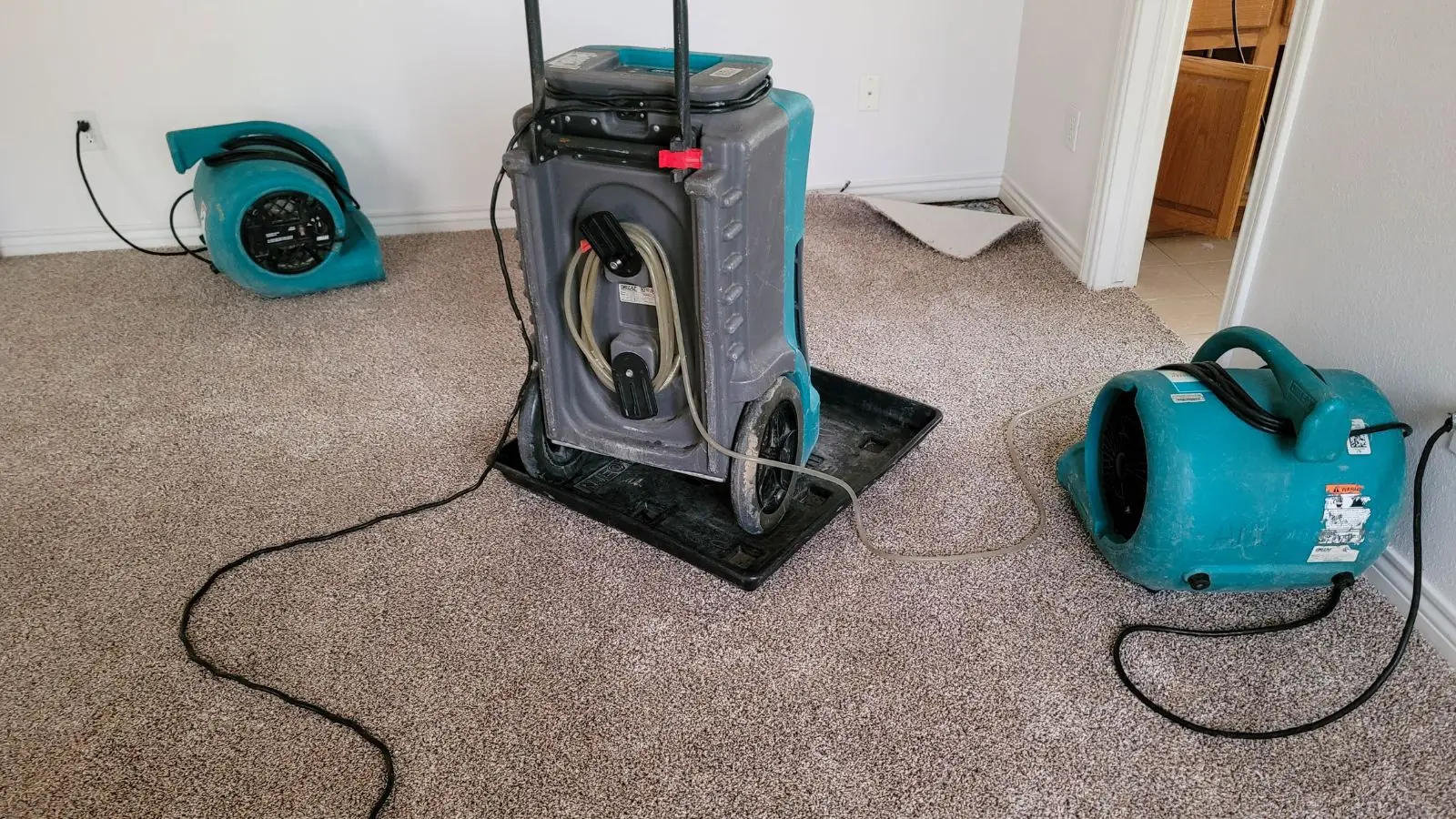
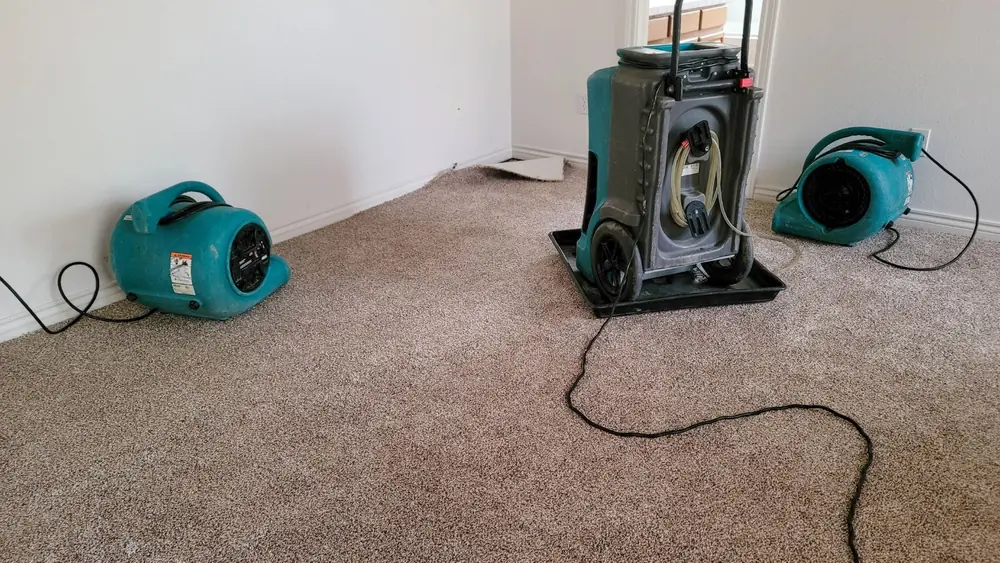
Air movers go on wet surfaces and LGR dehumidifiers go in the room. Wet carpet pad, soaked insulation or saturated drywall bottoms may be removed so the rest can dry.
Take daily readings
The crew returns, checks the meters against the dry standard and adjusts the equipment. Drying stops when the readings say so, not when the calendar does.
Electrical safety comes first
If water has reached outlets, the panel, a ceiling fixture or an appliance, or you hear buzzing or smell gas, leave the area and call 911 or your utility BEFORE calling anyone else. Shut off power at the panel only if the floor around it is dry.
Why is my wall still wet days after the leak stopped?
You fixed the faucet or replaced the supply line, yet the wall still feels cool, smells musty or shows a bubbling paint line days later. The leak is not back. Drywall paper, insulation and framing hold water long after the source is closed.
Getting that trapped moisture out of the structure is what water mitigation does. Meters find it, and equipment pulls it out instead of waiting for it to fade.
Structural Drying: Goals, Equipment and Daily Readings
Structural drying has one goal, which is bringing wet materials back to a dry standard. A crew sets that standard by metering a similar material in an unaffected part of your home, then dries the wet areas until they read the same.
Psychrometrics sounds technical, but it only describes how much water the air can hold. Air movers push air across wet surfaces so water leaves the material, and LGR dehumidifiers pull that vapor out of the air and drain it away. If the room stays humid, the water simply goes back into the walls.
Moisture meters check drywall, wood and subfloor each day, and the crew logs temperature, humidity and readings so equipment can be moved or pulled as areas reach standard. Many jobs run several days, and thick materials such as hardwood and plaster take longer than carpet or paint. A crew can estimate after metering, but nobody can honestly name a finish date before readings come in.
Dry in Place or Open the Wall: The Trade-Offs
Sometimes a wet wall can be dried without cutting it, by removing the baseboard and moving air through small openings at the bottom. That saves paint and drywall, but it only works when readings keep falling. If they stall, opening the cavity is the honest answer.
Clean supply-line water on drywall is a good candidate for drying in place, while contaminated water usually means carpet pad and insulation come out. If your home is older, as some around Old Town Moorpark and High Street may be, ask the crew how it handles suspect older materials before cutting, then see the rebuild stage.
What Happens at Each Stage of the Clock
| Time window | What the water is doing | What the crew does |
|---|---|---|
| First hours | Water travels along floors, into baseboards and down wall cavities | Stops the source, then extracts standing water with pumps and portable extractors |
| Day 1 | Drywall, pad and wood soak up moisture and may swell or stain | Meters and thermal camera map the wet zone, then air movers and LGR dehumidifiers go in |
| Days 2 and 3 | Hidden pockets in wall cavities and under cabinets stay wet | Daily readings, equipment moved to stubborn areas, wet materials removed if they will not dry |
What Sets the Price of Mitigation
Price follows the work, so scope and cost are explained after metering and before work starts.
Water category
Clean supply-line water is simplest. Category 2 or 3 adds removal of porous materials and cleaning.
Affected area
One wet bathroom wall costs differently from a hallway, two bedrooms and a closet. Metering sets the true footprint.
Materials involved
Carpet pad, drywall, hardwood, tile and cabinets each dry or fail differently and change what is pulled out.
Drying days and equipment
More wet square footage means more air movers and LGR dehumidifiers, running more days with daily checks.
Rebuild scope
Mitigation ends at dry. Replacing drywall, paint, flooring and trim is repair work, priced on its own.
Homeowners policies often cover a sudden failure and often exclude a leak that ran for weeks, so read yours and confirm with your carrier. Want your real number? Call, describe the room, and the dispatcher will explain what the scope depends on.
Water still spreading or a wall still wet?
The 24/7 line is open now. Same-day response when available, scope and price explained before work starts.
Insurance, Temporary Repairs and Your Claim Log
The California Department of Insurance tells claimants to make temporary repairs, such as plastic sheeting or plywood, because a policy may not cover further damage if you skip reasonable steps. Shutting off water and starting drying fits that advice.
The same guide says to keep a log of every phone call and copies of everything you send or receive. Photograph wet areas before anything is moved, and ask your insurer what it needs.
Questions about water mitigation in Moorpark
Yes. Dispatch runs 24/7, including nights, weekends and holidays, and same-day response is available when a crew is open. Tell the dispatcher whether water is still running, how many rooms are wet and whether power is involved, and they will explain the next step.
Many jobs run several days, though thick or dense materials can take longer and a crew can only estimate after metering. Equipment is air movers, LGR dehumidifiers, moisture meters and sometimes an infrared camera, all run and checked by the crew. Equipment rental is not offered, because setup and daily readings are what make drying work.
That depends on your policy and on what caused the water. A supply line that let go suddenly is often treated differently from a leak that went unnoticed for weeks. Ask your insurer before you assume either, and keep photos, moisture readings and a log of your calls.
Yes. After the crew meters the wet areas, they explain which materials will be dried in place, which will be opened up and what drives the price. If walls are opened and the scope grows, you hear about it before the change is made.
Mitigation stops the damage and gets materials dry. Repair rebuilds what was removed, such as drywall, paint and flooring. Water that is pooled on the floor is a job for emergency water removal, which usually flows straight into drying.
They help a damp room but rarely a soaked wall cavity or subfloor, because without a meter you cannot tell when the inside is dry. Trapped moisture leads to swelling, odors and later mold. You can ask a prospective crew whether it follows ANSI/IICRC S500.