
Why flood water is treated as Category 3
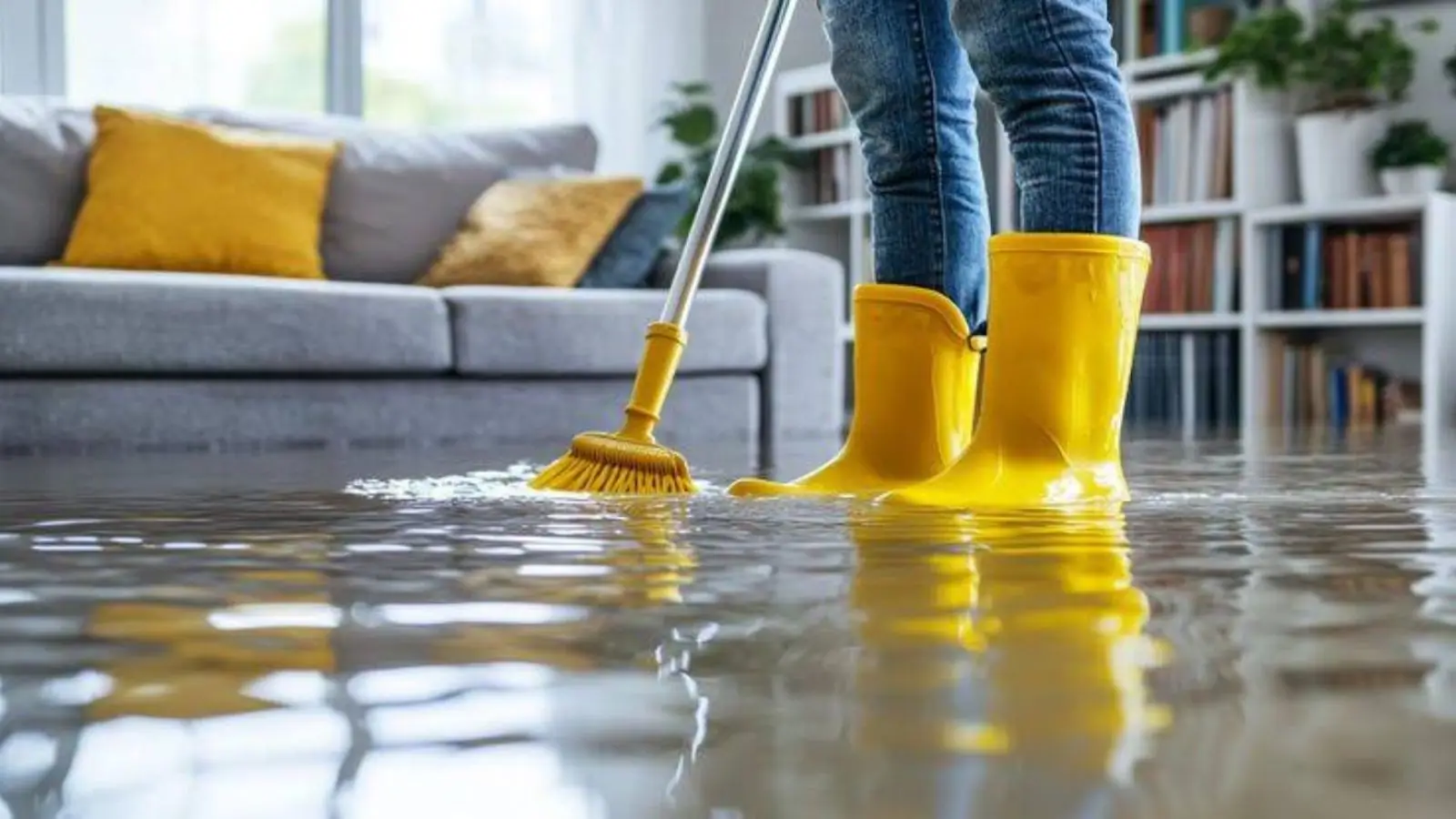
Flood water cleanup in Moorpark begins with one classification. Water that came over a curb, out of a creek channel or up through a floor drain is Category 3 under the ANSI/IICRC S500 standard, meaning grossly contaminated. It carries soil, fuel, animal waste and sometimes sewage, even when it looks only slightly muddy.
Rain that enters through a roof or a failed window seal is a different case. It usually starts as Category 1 or 2 and drifts upward the longer it sits in insulation and carpet pad. So the first thing to settle is where the water came from, because that decides how much of your house has to come out and how much can be dried in place.
The first 48 hours, in order
Check power and gas before you step in
Water near outlets, the panel or a gas appliance is a reason to stay outside. If you smell gas or see sparking, leave and call the gas utility or 911 first. Cut power only if you can reach the panel while standing on dry ground.
Photograph everything before you touch it
Take wide shots of every room, then close shots of the waterline on each wall. Film a slow walkthrough with the date spoken aloud. Photograph appliance labels and the contents of lower cabinets, since adjusters ask for them later.
Get the standing water out
Truck-mounted or portable extraction units pull water from carpet and hard floors far faster than a shop vacuum, and a household vacuum should never be used on wet floors. If water is still entering, sandbags at the door buy time but will not stop it.
Pull what cannot be saved
Soaked carpet pad, wet insulation and low drywall come out early because they hold contamination against the framing. Cut a small square of the carpet and keep it, with photos, so your insurer can see what you removed.
Start drying and call for help
Air movers and LGR dehumidifiers dry the structure, and a moisture meter tells you when to stop. Open the house only if outside air is drier than inside. Call a restoration crew early in a regional storm, since several towns may be calling at once.
Water in the house right now?
Dispatch is open 24/7 and you get the scope and a price explanation first.
Moorpark rain, flood maps and sandbags
The City of Moorpark reports 15.85 inches of rain in an average year, with 3.21 inches in January, 1.24 in April and 0.01 in July. Rain is concentrated in the cooler months. Check gutters, yard grading and door thresholds before then, and photograph your home dry so you have a comparison.
The city also reports that FEMA has issued Letters of Map Revision for its flood maps, one for Arroyo Simi (case number 10-09-2904P) and one for Walnut Canyon Drain (case number 12-09-0985P). A revision can change whether a property sits in a mapped flood hazard area. Do not rely on an old lender letter. Check the FEMA flood map for your address, or call the FEMA Map Service Center at 1-800-358-9616.
Sandbag stations are posted at Villa Campesina Park and at the south end of College View Avenue, and Public Works takes questions at 805-517-6240. Sandbags divert shallow water at a door or garage and do nothing once water is inside. For questions about your street, City Hall is at 323 Science Drive, 805-517-6200.
Keep or throw away: a material-by-material table
The rule of thumb is simple. Hard, non-porous materials can usually be cleaned and kept, while porous ones that soaked up Category 3 water usually cannot be made safe again. The table covers the items Moorpark homeowners ask about most.
| Material | Keep or discard | Why |
|---|---|---|
| Carpet and pad | Discard | Pad acts like a sponge for contaminated water and cannot be sanitized in place. |
| Drywall below the waterline | Discard | Paper facing wicks water upward and holds contamination, so crews cut above the wet line. |
| Fiberglass batt insulation | Discard | It stays wet against the framing and cannot be rinsed clean. |
| Particleboard cabinets and shelving | Usually discard | The core swells and crumbles once soaked, and the swelling does not reverse. |
| Solid wood furniture | Often keep | It can be cleaned and dried slowly, but expect finish damage and some warping. |
| Upholstery and mattresses | Discard | Foam and fabric trap contaminants deep inside. |
| Hardwood flooring | Case by case | Short contact may dry in place, but long contact usually means replacement. |
| Tile, stone and sealed concrete | Keep | Hard surfaces clean and disinfect well, though the subfloor beneath may still be wet. |
| Refrigerators and washers | Case by case | Motors and wiring may be ruined, and a technician should check before you plug anything in. |
| Food, medicine and open containers | Discard | Anything that touched flood water or sat warm after the power failed is not worth the risk. |
Photographs, documents and keepsakes are the hard cases. Freezing wet paper stops further damage until a specialist can dry it, and a short drying delay costs far less than losing the originals.
Gear, power and gas without drama
State guidance relayed by Cal OES recommends gloves, boots and goggles for flood cleanup, and that is the right baseline. Add long sleeves, cover any cuts, and wear a fitted respirator-style mask if you disturb dust or visible mold. Keep children and pets out of the work area.
Crews working Category 3 jobs add disposable suits and boot covers, and they bag and carry out contaminated material instead of dragging it across clean rooms. You can copy that habit at home by keeping one doorway as the exit route.
Stop and call first
If water has reached the panel, outlets or a gas appliance, do not flip switches or relight anything. Leave, then call the utility or 911 from outside. Sewage in the water means no one should wade through it without protective gear.
Flood damage and your policy
FEMA states plainly that most homeowners insurance does not cover flood damage, and that only flood insurance pays to rebuild after a flood. A burst pipe or a failed water heater is a different event, since sudden and accidental water damage is often covered. Check your policy for the flood wording, and ask your agent whether you hold a separate flood policy and whether a waiting period applied.
The California Department of Insurance advises making temporary repairs, such as tarping a roof or boarding a window, because a policy may not pay for damage that follows if you do not take reasonable steps. It also says to keep a log of every call and copies of everything you send. Its consumer hotline is 1-800-927-4357. For the cleanup itself, see water damage cleanup and flood damage restoration.
When a regional storm hits more than one town
Storm water does not stop at city lines. The same system that fills a Moorpark garage can leave water in Simi Valley and Fillmore homes, which is why phones get busy together. Call early, say plainly whether the water came from outside, and have your photos ready to describe the job.
Questions readers ask
Usually not. FEMA says most homeowners insurance does not cover flood damage, so overflow from a creek, channel or storm drain typically needs a separate flood policy. Read the exclusions in your own policy, and ask your agent which event your coverage treats as flood and which as a sudden pipe or appliance failure.
Light jobs with hard floors and a few inches of water are manageable if you wear boots, gloves and eye protection. Anything involving soaked drywall, carpet, insulation or sewage is a bigger job, because material left in place stays wet behind the surface. A moisture meter and thermal camera find what you cannot see.
Often several days, and sometimes longer for thick framing or concrete. The honest answer comes from moisture readings taken each day, not from a calendar. Equipment stays until the readings match a dry reference material.
Not as a first move. Remove contaminated material, wash hard surfaces with soap and clean water, then disinfect per the product label. Never mix bleach with ammonia. Disinfectant does not dry anything, so the drying still has to happen.
Yes. The crew walks the affected rooms, takes readings, and explains scope and price before work starts. Ask what is being removed, what is being dried, and what is left for a rebuild contractor.