
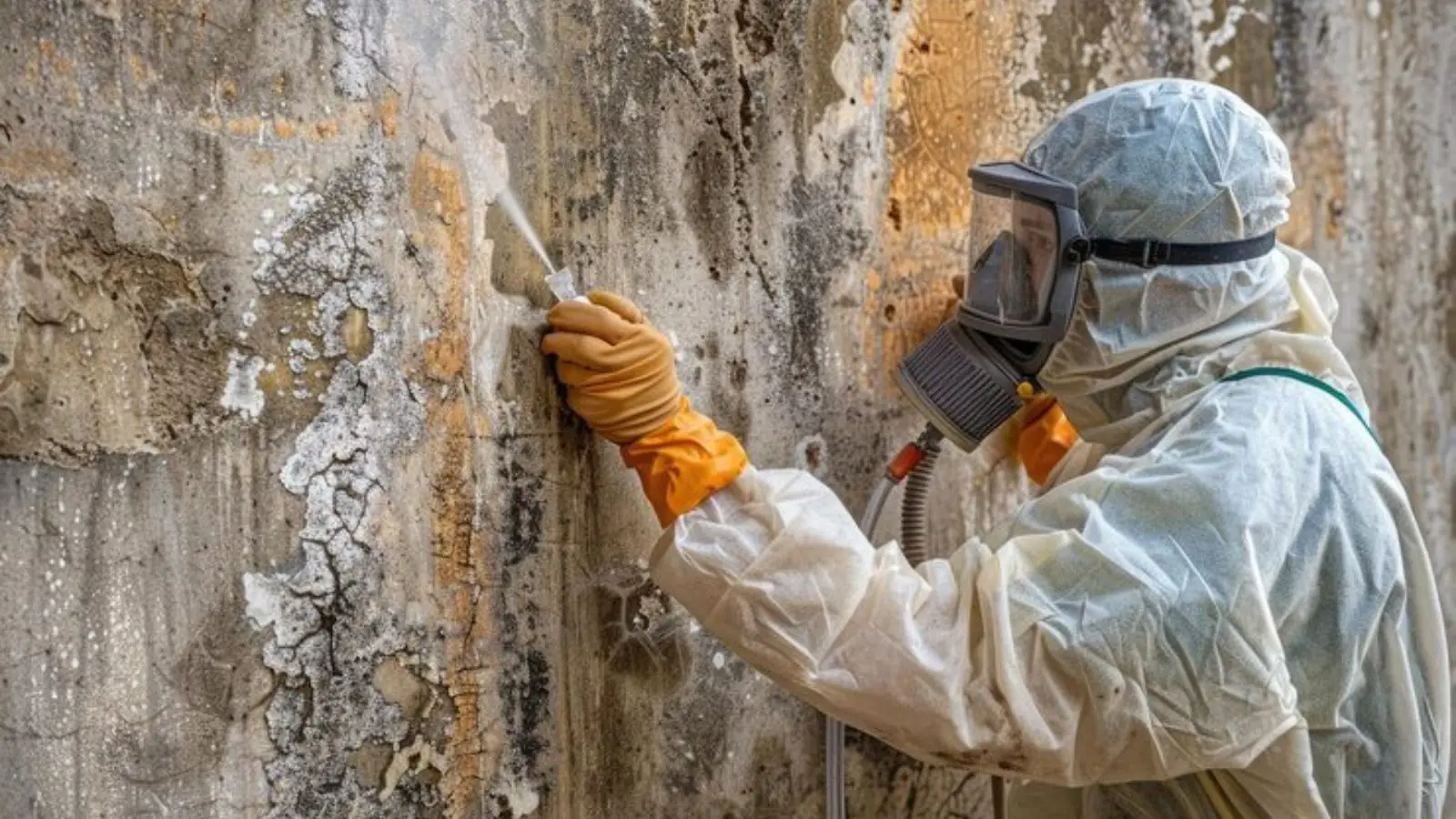
Surface mold and inside-the-wall mold are different jobs
Removing mold from walls in Moorpark, CA starts with one question: what is the wall made of, and is the growth only on its face? Tile grout and a painted bathroom wall can often be cleaned. Drywall that is soft, stained or smells musty usually cannot, because mold can sit in the paper and the gypsum.
Plaster sits in between. If you live in an older home, in Moorpark or in Thousand Oaks or Fillmore, plaster may be hiding behind newer paint. Old hard plaster over lath is dense and sometimes cleans up. But plaster that is crumbling or damp to the touch is wet to the core. In every case, the stain is a hint and the cause is behind it, usually a few feet away from where the mark shows.
Where the moisture is coming from
Wall mold almost never starts at the wall. It starts at a leak or a cold spot nearby. The pattern of the stain tells you a lot, and the cause tells you whether this is a cleaning job or a repair job.
Leaks behind the wall
A supply line, a shower valve, a drain or a toilet supply feeding a slow drip. Stains often appear below the source and spread sideways.
Cold exterior corners and closets
Warm air meeting a cold corner condenses on the wall. Closets packed tight against an exterior wall are classic spots, since air cannot move.
AC condensate lines
A clogged condensate line overflows into the drain pan and wall near the air handler. Check the line outlet if the stain sits near the unit.
Roof and siding leaks
Stains that grow after a storm, high on a wall or under a window. The path inside is rarely where the stain shows.
Bath and shower walls
Failed caulk, cracked grout or a bath fan that vents into the attic. The wall behind the tile can be wet while the tile looks fine.
What you can try yourself
For small spots on hard, sealed surfaces, EPA advises scrubbing with detergent and water and drying completely. For a patch under about 10 square feet on tile, glass or sealed paint, that is a fair DIY job if the cause is already fixed. Wear gloves, eye protection and a respirator rated for the task, and never mix bleach with ammonia products.
Stop and call if the drywall is soft, if the stain returns after a clean, if the area keeps growing or if you have no idea where the water is coming from. EPA also notes porous material may need to be thrown away. Cutting into a wall without a plan can spread dust through the room.
Moorpark storm months and your walls
The City of Moorpark lists monthly rainfall normals of 3.21 inches in January, 1.24 in April and 1.44 in October, with 15.85 inches for the year. A roof or siding leak shows up in those months, so look at ceiling-line and window-line stains a day or two after rain and photograph them with a date.
If a stain appears in a dry month, the cause is more likely plumbing, condensation or an AC drain. That narrows your search before you call anyone.
If the repair involves new drywall, framing or plumbing changes, confirm with City of Moorpark Building and Safety if a permit is needed. Permit applications go through an online portal, and the division lists 805-517-6272 for help.
How professionals cut it out
A crew reads the wall with a moisture meter and infrared camera, then marks the cut. Drywall usually comes out beyond the visible stain, often well past it in each direction, until the cut line shows clean, dry material. That surprises people, but it is how you reach the edge of the problem.
Containment goes up first, with negative air through a HEPA filter. The removed drywall is bagged, framing is HEPA vacuumed and damp wiped, and drying equipment runs until meters confirm dry framing. Only then does the rebuild start. Ask any company whether its crews follow the published ANSI/IICRC S520 standard.
Wall still damp and no idea why?
Call and describe the stain, the room and any recent leak. The job is explained and priced up front.
What to do today, before you call
Stop the water if you can
Close the fixture shutoff, turn off the washer supply or fix the drip temporarily. If a roof is leaking, a tarp is a temporary hold. California Department of Insurance guidance also advises reasonable temporary repairs.
Do not scrub, sand or cut
Leave painted drywall alone. Sanding or scraping puts dust in the air and spreads it.
Photograph and mark
Take photos with a ruler for scale. Mark the edge of the stain with pencil and date it so you can see growth.
Run fans and a dehumidifier
Point a fan at the wall, run a dehumidifier in the room and keep the door closed to limit spread.
Move belongings out
Take furniture, books and clothes away from the wall.
Write down what happened
Note when you first saw it and any recent leak. Keep a log of calls, as CDI recommends, if you plan to file a claim.
Drying and replacement
After removal comes drying. Air movers and LGR dehumidifiers run for days, and the crew rechecks moisture readings. The rebuild comes afterward: new drywall, texture, primer and paint. Painting over damp drywall is the quickest way to start the cycle again.
A restoration crew will not fix the pipe, flash the roof or reseal the shower. Those need a plumber, roofer or tile contractor, and a water mitigation crew will coordinate drying around them.
Questions readers ask
We cannot tell from a description. Dark stains can be mold, mildew, soap scum or old water marks. If the spot is on grout or sealed paint and scrubs off with detergent and water, that is a good sign. If it returns, or the wall is soft, call.
It depends on the moisture map. Crews cut until the material at the edge reads dry and clean, which often means well past what you can see. They should explain the cut line before work starts.
No. Sealing a damp wall hides it and does not fix the moisture. Primer and paint go on after drying and removal. If the wall is still damp, the finish can bubble and the cycle repeats.
Check your policy. Insurers generally separate abrupt losses from gradual ones, and the two can end up with very different outcomes. Ask your insurer whether mold after a covered loss is handled differently from other damage. Read our mold remediation page for how scope is documented.