
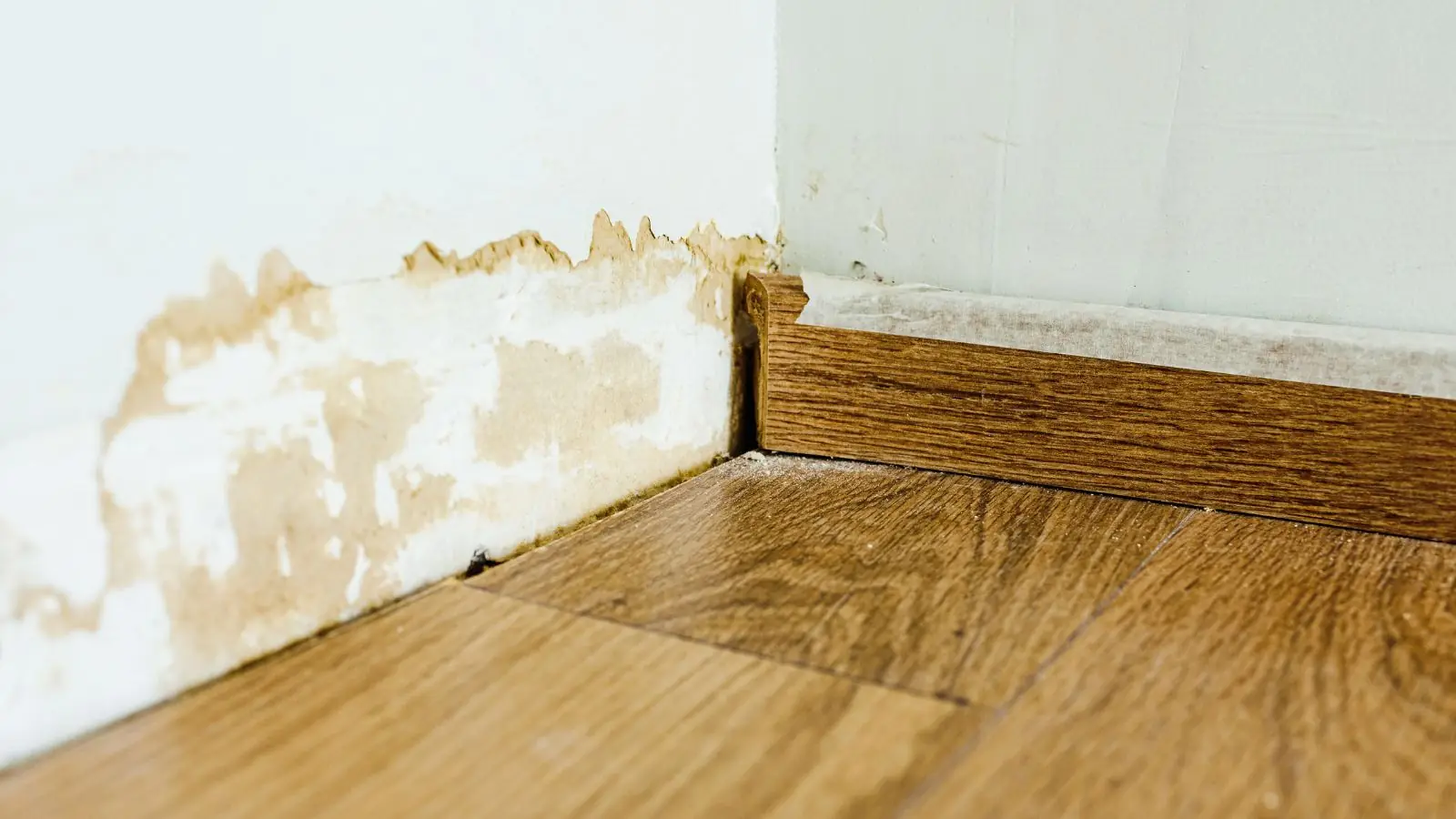
Surface stain or structural softening?
Repairing water damage on wood in a Moorpark home starts with one question: did the water mark the finish or enter the fibers? A gray ring under a plant pot is a finish problem. A baseboard that crumbles at the bottom edge, or a door jamb that gives under your thumb, is a structural one.
The two outcomes call for very different work. Staining can often be sanded, bleached or refinished once the wood is dry. Softening means the fibers have lost strength, and no finish will put it back.
Two tools and five minutes
The screwdriver probe is the oldest test and still a good one. Press a flat screwdriver into the lowest edge of the wood at a few spots, including the end grain. Sound wood resists and scratches. Soft wood lets the tip sink in a few millimeters, or lifts out in stringy fibers.
A moisture meter adds numbers. Pin meters read at depth, and pinless meters scan a wider patch without leaving holes. Compare readings to a dry piece of the same material elsewhere in the house, since the target depends on the wood. A reading well above that reference means drying is not finished, whatever the surface looks like.
Damage sign, depth and the usual fix
| Damage sign | Likely depth | Usual fix |
|---|---|---|
| White or gray ring on a furniture top | Finish layer only | Light abrasion or refinishing once the piece is dry |
| Dark staining that follows the grain | Into the fibers | Sanding, wood bleach or oxalic acid, then refinish. Deep stains may stay visible |
| Raised grain or slight swelling | Outer layer, still drying | Dry fully, then sand flat. Do not sand while the meter reads high |
| Cracked, flaking paint on trim | Moisture behind the coating | Dry, scrape, prime and repaint. Replace if the wood is soft |
| Soft spot that a screwdriver sinks into | Structural, fibers broken down | Cut out and replace the section. Fillers are only cosmetic |
| Black or green growth on the wood | Surface growth on a source of moisture | Find and stop the water first, then clean or replace per scope |
| Swollen laminate or particleboard edge | Through the whole core | Replace. Swelling in engineered boards does not reverse |
Moorpark humidity and how fast wood dries
The City of Moorpark lists annual humidity highs near 68 percent and lows near 42 percent, with January highs of 70 percent and October highs of 75 percent. Wood trim and furniture trade moisture with the air, so a wet board dries more slowly on a damp morning. Run the dehumidifier hardest on humid days and trust the meter, not the weather.
The same page gives 3.21 inches of rain in January and 0.01 inches in July. A repair made in a wet January may behave differently in a dry July as lumber settles. Leave a small expansion gap on new trim and flooring edges, and ask the supplier how long to let new wood acclimate.
Not sure what you are looking at?
Call for a moisture reading and a plain explanation of scope and price before work starts.
Dry first, then repair
Repairs sealed over damp wood fail. Paint blisters, wood filler shrinks away from the edges, and the finish clouds. Drying with air movers and LGR dehumidifiers is often the cheapest step in the job, and it is the step most people skip.
Time matters, though not as a stopwatch. EPA guidance says the key to mold control is moisture control, so keep air moving across the wet piece and the dehumidifier running until your meter readings match the dry reference.
What changes by piece
Furniture
Remove drawers and cushions and stand the piece on blocks so air reaches the bottom. Veneer that has lifted can sometimes be reglued, but a swollen particleboard carcass cannot be saved.
Baseboard and trim
These are cheap to replace and often hide wet drywall behind them. Pull a short section and check the wall before you repaint.
Door jambs
The bottom 6 inches take splashes and wicking from a wet floor. If the probe sinks in, a splice repair or a new jamb is the honest answer.
Cabinet bases
Kick plates and the floor of the sink cabinet trap leaks. Solid wood can often be dried and saved, while particleboard under a sink usually cannot.
Framing
Studs and plates that stay wet can lose strength. A framing carpenter or engineer should judge anything load-bearing. Sistering a stud is a structural repair, not a weekend patch.
Where DIY stops
You can reasonably sand and refinish a dry table, replacing a baseboard or touching up a door casing are reasonable weekend jobs. The limits are firm in a few places.
- Anything load-bearing, such as a beam, a joist or a stud that probes soft.
- Wood that stays damp after several days of fans, which suggests water you cannot see.
- Wet material behind finished walls, where a thermal camera and meter map the real extent.
- Large areas of visible growth, which call for containment and a defined scope.
Restoration work is not plumbing or carpentry. A restoration crew dries the structure and tears out what cannot be saved, while a licensed contractor rebuilds. Ask whether California licenses the specific trade work you need.
The probe-and-meter routine is the same if your house is in Thousand Oaks or Camarillo, and crews serve those towns as well.
Check for mold before you close it up
Before you refinish or repaint, look at the back of the trim and the wall cavity behind it. Dark growth, a musty smell or paint that keeps bubbling means moisture is still present. Fix the source, whether a supply line, a window seal or a roof flashing, before any repair.
EPA guidance says the water problem must be fully fixed before cleanup counts as finished. If mold is on more than a small patch, see mold remediation or let a crew run water mitigation first.
Where the science of wood and moisture is published
According to the USDA Forest Products Laboratory, whose Wood Handbook is the standard public reference on how wood takes up and gives off moisture, wood swells and shrinks as its moisture content changes. That is the mechanism behind cupping, crowning and gaps, so drying slowly and measuring first matters more than any finish.
A published reference explains the general behavior, but it cannot read your boards. A moisture meter on your own floor is what should drive the decision to sand, replace or wait.
Questions readers ask
Many pieces can be saved. If the wood is dry, firm to the screwdriver and only discolored, sanding or bleaching and refinishing is usually enough. Softened, flaking or swollen wood is a replacement job, and rooms in Moorpark that stay humid need extra drying time before you decide.
No. Filler covers a hole but adds no strength, and it cannot bridge fibers that have broken down. Use it for small cosmetic dents in sound wood, and splice or replace anything that probes soft.
Usually the wood was still wet or the source is still active. Paint traps moisture, then blisters when it tries to leave. Stop, check the meter and look behind the wall before repainting.
Not safely. Heat on one side of a thick piece can dry the surface fast and crack it while the core stays wet. Moving air plus dehumidification dries more evenly, which is what air movers and LGR units do.
Yes. Crews read moisture, explain what is dried, removed or left for a carpenter, and give you the scope and price before work starts.