
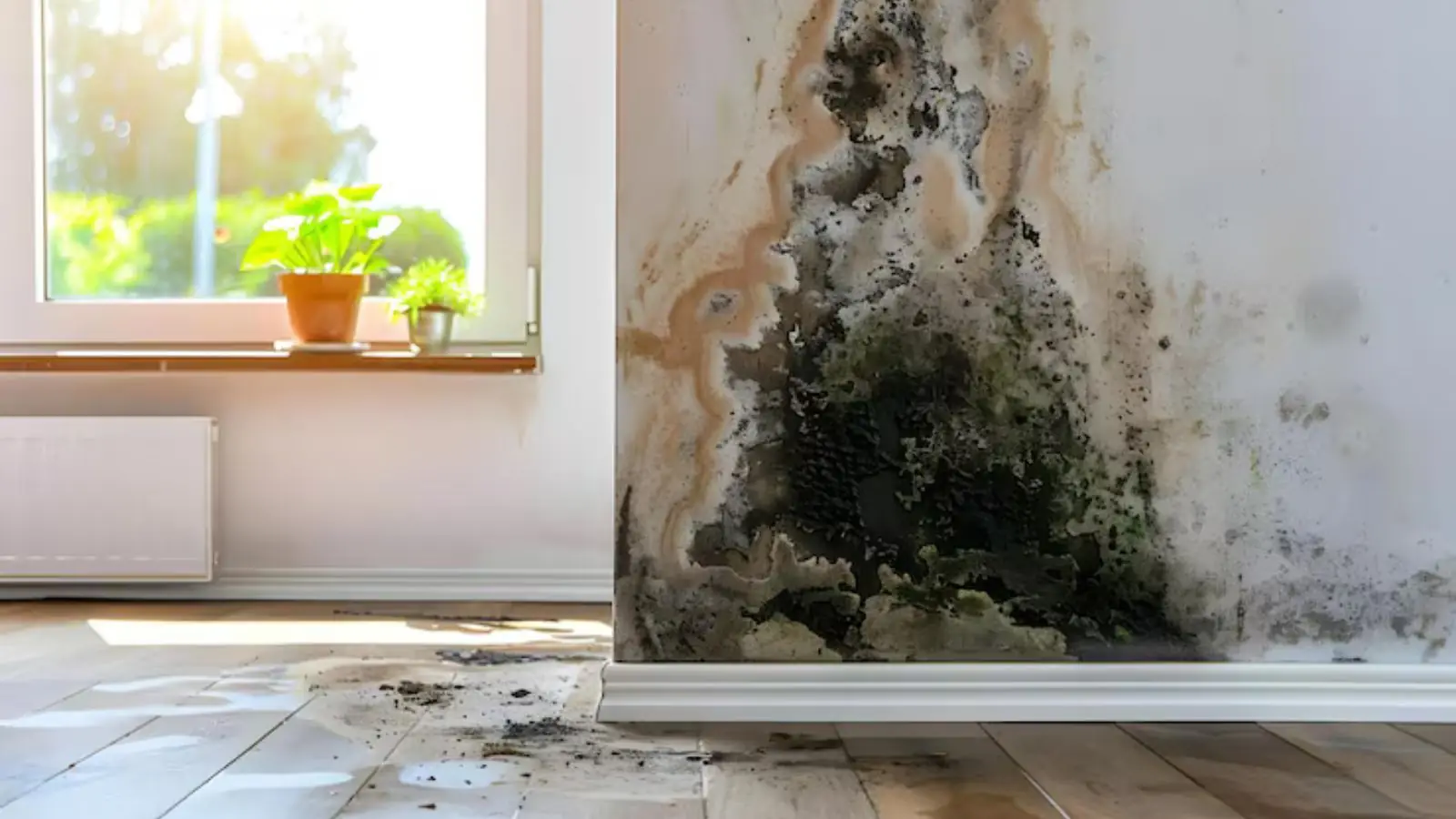
Mold needs moisture, and moisture is the whole story
Water damage mold in a Moorpark house begins when a wet material stays wet. Mold spores are in ordinary indoor air, so cleaning the stain does not solve it. What matters is whether drywall, wood, carpet pad or insulation holds enough moisture to support growth.
EPA puts it directly, saying the key to mold control is moisture control. A supply line leak behind a dishwasher, a roof leak above a hallway ceiling or a condensate line that overflowed into a closet are the same problem in different rooms. Each is a wet material plus time.
Why drying speed matters, and what it does not mean
EPA guidance advises drying water-damaged areas and items within 24 to 48 hours. Treat that as a reason to move fast, not a stopwatch that expires at hour 49. Thick materials, closed wall cavities and humid weather dry slowly, so some jobs need active equipment well beyond that window.
Cal OES, relaying state health department guidance, says drying a home and removing water-damaged items is the most important step in preventing mold. In plain terms, every day a wet wall stays closed up makes the job larger and the options fewer.
Three leaks that become mold calls
Roof leak above a hallway
Water runs down the framing and soaks the attic insulation before the ceiling stains. By the time the paint bubbles, the top side of the drywall has been wet for a while.
Dishwasher or sink supply line
A slow drip inside a cabinet keeps the base and back wall damp for weeks. The first sign is often a smell when you open the door.
Overflowed AC condensate line
The drain pan spills into the closet or ceiling below the air handler. The water is clean, but it keeps arriving, so the materials never dry.
Moorpark humidity and what it means for drying
The City of Moorpark lists annual humidity highs near 68 percent and lows near 42 percent, with January highs of 70 percent and October highs of 75 percent. Moist air slows drying, so wet materials in a closed room take longer to dry on a damp day than a dry one. Run dehumidification, not just fans, and let moisture readings decide.
The city lists 3.21 inches of rain in January and 0.01 inches in July. A roof or window leak is most likely to be tested in winter, so check ceilings and window corners after the first heavy rain. Catching a damp spot early is cheaper than opening a wall later.
If the wet area was never dried
Find and fix the water source
A dripping fitting, a leaking window seal or a clogged condensate line will keep feeding any cleanup. EPA says the water problem must be fully fixed before remediation can be considered finished. Call a plumber or roofer first if needed.
Look for the signs, not just the stain
Check for a musty smell, bubbling paint, warped baseboards and swollen cabinet bases. Look in closets, under sinks and behind furniture along outside walls.
Measure instead of guessing
A moisture meter shows whether materials are still wet, and a thermal camera maps hidden damp areas. Dry-looking drywall can still read high.
Dry what can be dried and list what cannot
Solid wood and framing can often be dried. Soaked carpet pad, insulation and swollen particleboard usually cannot, and visibly moldy porous items are typically discarded.
Decide on inspection and remediation
Small patches on hard surfaces may be handled by the homeowner with care. Larger or hidden growth calls for a defined scope.
Wet area that was never dried?
Call to talk through next steps. The plan and price basis come before any work begins.
Inspect, test or just remediate?
| Situation | Reasonable step | Why |
|---|---|---|
| Visible growth on drywall or trim | Fix the source and plan the removal. Testing is usually unnecessary | EPA says sampling is usually unnecessary when mold is visible |
| Musty smell, nothing visible | Moisture inspection with a meter and thermal camera | Locates hidden wet materials before any opening |
| Before cleanup to learn what is present | Sampling is optional, and results are hard to interpret | Mold spores are normal in indoor and outdoor air |
| After remediation to confirm it was done | Independent clearance inspection or testing | Surface sampling can show if an area was adequately cleaned |
| Home sale or loan | Independent assessment and clearance documents | A buyer or lender may ask for documentation. Acceptance is their decision |
Independent means the person testing is not the company doing the removal. That separation keeps the clearance honest.
What mold remediation involves
Remediation is controlled removal, not spraying. Crews set containment with plastic barriers, run negative air machines and HEPA air scrubbers, remove affected porous materials in bags, and HEPA vacuum and wipe the remaining surfaces. Ask whether the crew works to the ANSI/IICRC S520 standard for mold remediation.
Antimicrobial products are applied per label where appropriate, but they are not a substitute for removal or drying. See mold remediation for the process, and water damage cleanup when the problem began with a recent wet event.
Honest limits
No company can promise how a building will behave if moisture returns. A pipe can leak again, a roof can fail again, and a house can sit humid in a wet season. The best protection is a fixed source, dry materials and a way to catch the next leak early.
This page is general information, not a diagnosis of anything in your house. Customers in Simi Valley and Camarillo face the same sequence, and crews serve them too.
Questions readers ask
EPA guidance advises drying water-damaged materials within 24 to 48 hours, so the sooner the better. Moorpark's humid months can slow drying, so measure the material with a meter. If it has stayed damp longer than that, an inspection is reasonable.
Not always. EPA says that when visible growth is present, sampling is usually unnecessary. Testing can help when there is a smell but no visible source, or to confirm a cleanup afterward.
Bleach on porous materials like drywall does not reach the growth inside, and it does not remove the moisture. It may also discolor surfaces. Removing the wet material and drying the area is the usual route.
Not until the area is dry and the source is fixed. Paint can hide a continuing problem and then blister. Check readings first.
Yes. You get the scope and a price explanation first, including what is removed, how containment is set, and who does the clearance check.