
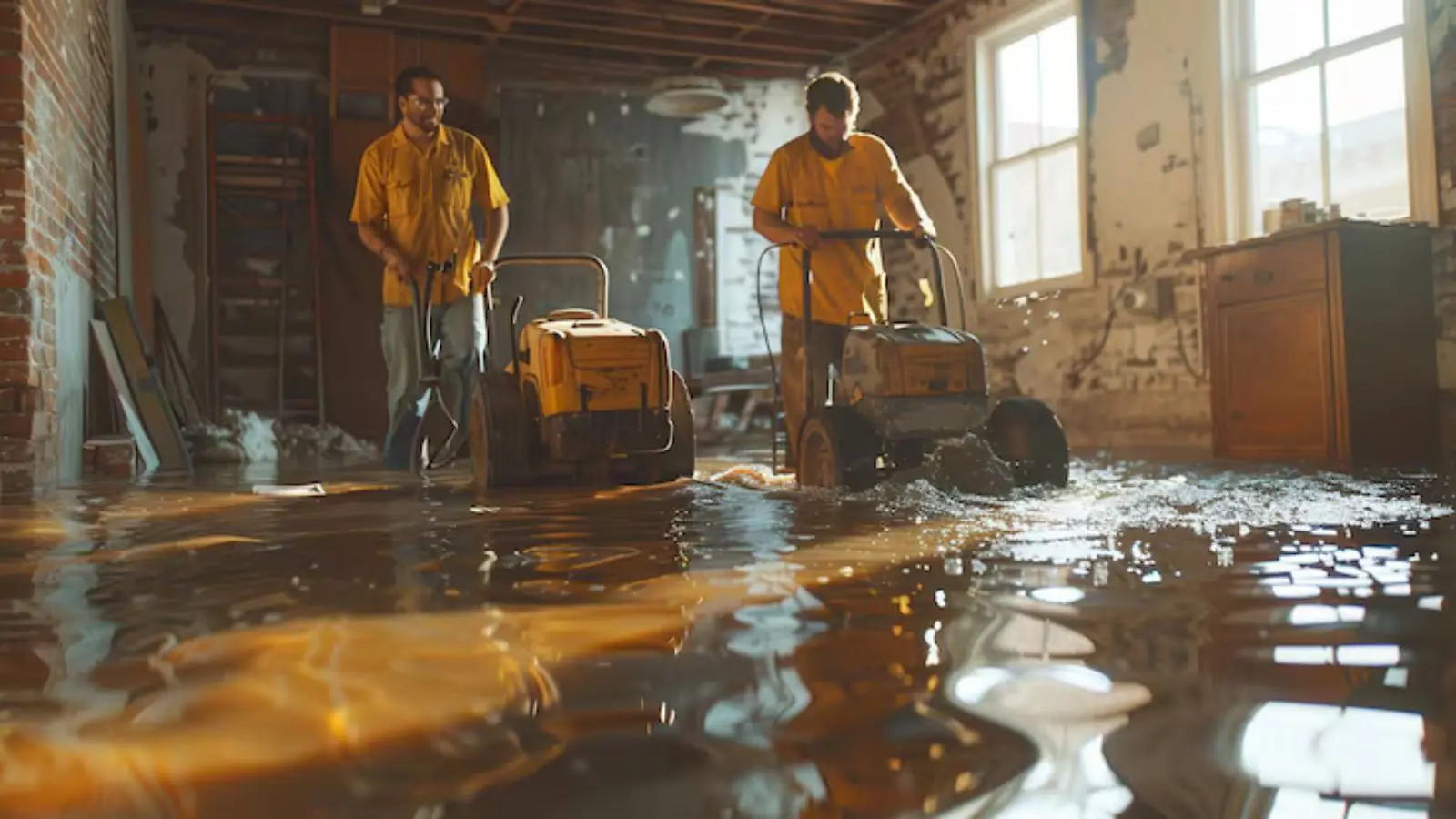
What water damage restoration steps look like on a real job
The water damage restoration steps in Moorpark follow a rough order: stop the source, make the area safe, inspect and map the moisture, extract water, remove what cannot be saved, dry and monitor, clean, document and then rebuild. Jobs vary. A dishwasher leak that reached one kitchen floor may skip several phases, while a ceiling collapse after a roof leak runs through all of them.
The table below shows the whole job at a glance. Durations are general, because materials, water category, season and building layout move every number. No honest crew can promise a finish date before seeing the structure.
Phase by phase: what happens and how long it tends to take
| Phase | What happens | Typical duration, in general terms |
|---|---|---|
| 1. Stop the source and make safe | Valve closed, power risks assessed, people and pets kept out of contaminated water | Minutes to hours, often before the crew arrives |
| 2. Inspection and moisture mapping | Moisture meters, thermal camera and a walk of every adjacent room | Usually the first visit |
| 3. Extraction | Truck-mounted or portable units pull standing water and wet carpet | Hours, longer for large areas |
| 4. Removal of unsalvageable materials | Wet pad, soaked insulation and damaged drywall come out | Hours to a day |
| 5. Drying and monitoring | Air movers and dehumidifiers run while daily readings track progress | Often several days, depending on materials |
| 6. Cleaning and antimicrobial where needed | Surfaces cleaned, antimicrobial applied per product label | Hours, after demolition |
| 7. Documentation | Photos, readings and equipment logs are collected | Throughout, finalized at drying sign-off |
| 8. Rebuild | Drywall, paint, flooring and trim are replaced | Days to weeks, often by a separate crew |
The slowest phases are drying and the rebuild, and both depend on decisions made earlier in the job.
The first hour is about safety, not equipment
Before anyone sets a dehumidifier, the water must stop and the room must be safe. Shut off the fixture valve or the main. Keep people and pets out of sewage or flood water. If water is near outlets, a ceiling light or the panel, do not touch anything electrical until it is safe, and call the utility or 911 for any gas or electrical risk.
A crew's first act should be to find out what kind of water it is. Category 1 comes from a clean source such as a supply line. Category 2 has significant contamination, such as a washing machine overflow. Category 3 is grossly contaminated, such as sewage or flood. Water that sits long enough can drop to a worse category, which is why speed matters.
Moorpark water sources and why they shape the job
Ventura County Waterworks District No. 1 serves the city of Moorpark and nearby unincorporated areas. The Ventura County Public Works Agency says about 80 percent of supply is normally imported through the State Water Project, with five district wells supplying the rest. A broken supply line therefore starts as clean Category 1 water. Ask your water utility how the shutoff and meter work at your address.
The City of Moorpark's flood map page records two FEMA Letters of Map Revision, for the Arroyo Simi and the Walnut Canyon Drain. If floodwater, rather than a pipe, soaked the house, the water is treated as Category 3 and the job changes: more removal, more cleaning, more containment. Check the FEMA flood map for your address and ask whether your policy covers flood.
For permits on demolition or rebuild, ask your city building department. Moorpark City Hall is at 323 Science Drive, and a phone call before the rebuild phase is easier than a surprise during it.
Ready for the first step?
Call the 24/7 line. We explain scope and price before work starts.
Moisture mapping is where a job is won or lost
Surface dryness fools everyone. A floor that feels fine can hold wet pad and subfloor under it, and a wall that looks clean can be wet behind the baseboard. A good inspection uses a moisture meter on materials and a thermal imaging camera to spot cooler wet areas, then confirms them with the meter.
Ask for the map. Ideally you get a sketch or photos showing which rooms and walls are wet and where the starting readings were. That map is the baseline for every later reading and for the insurance file. Crews handling water mitigation build it on day one.
Extraction and removal: taking out what will not dry
Extraction removes liquid water fast, because evaporation alone is slow and puts moisture into the air. Truck-mounted units reach long hoses into a house, while portable extractors handle upper floors and tight rooms. Carpet may be lifted and the pad discarded, since pad is cheap to replace and slow to dry.
Removal decisions follow the water category and the material. Wet insulation and drywall in contact with Category 2 or 3 water are generally removed. Hardwood and clean plaster may be dried in place if conditions allow. Ask your crew to explain each item they remove and show you the readings behind it, because the tear-out sets the rebuild bill.
Crews that provide emergency water removal do this first stage, often the same day when available.
Drying, monitoring, cleaning and the line to the rebuild
Drying equipment runs for days, and someone must check it. Daily visits record temperature, humidity and moisture readings, then move or remove equipment as areas reach their dry goal. The job ends when readings match dry reference materials, not when the room feels dry.
Antimicrobial is applied where the water category or conditions call for it and used according to the product label. It is not a substitute for drying. If mold shows up, the cause is moisture, so mold remediation is a separate job that starts after the water source is fixed.
Restoration is not plumbing, roofing or waterproofing. Fix the leak that caused it, or the job repeats.
Rebuild is the last phase. Some crews do both, while many hand off to a separate contractor. Ask who is responsible, what is quoted and whether permits are needed.
The same sequence applies in Camarillo and Thousand Oaks, though hillside lots and slab foundations change where the water travels.
Questions readers ask
Ask your city building department. Whether demolition or a rebuild needs a permit depends on the scope, and the department can answer for your address. Moorpark City Hall is at 323 Science Drive.
The crew's moisture readings should match the dry reference readings for the same materials, and you can ask to see the daily log. A room that feels dry is not enough evidence.
Often you can stay, but it depends on the water category, the size of the job and noise from equipment. Sewage or flood water and large demolition usually mean you should plan to be elsewhere.
Sometimes the same company, often a separate licensed contractor. Ask who is responsible, what is included and when the drying sign-off happens before rebuild starts.