
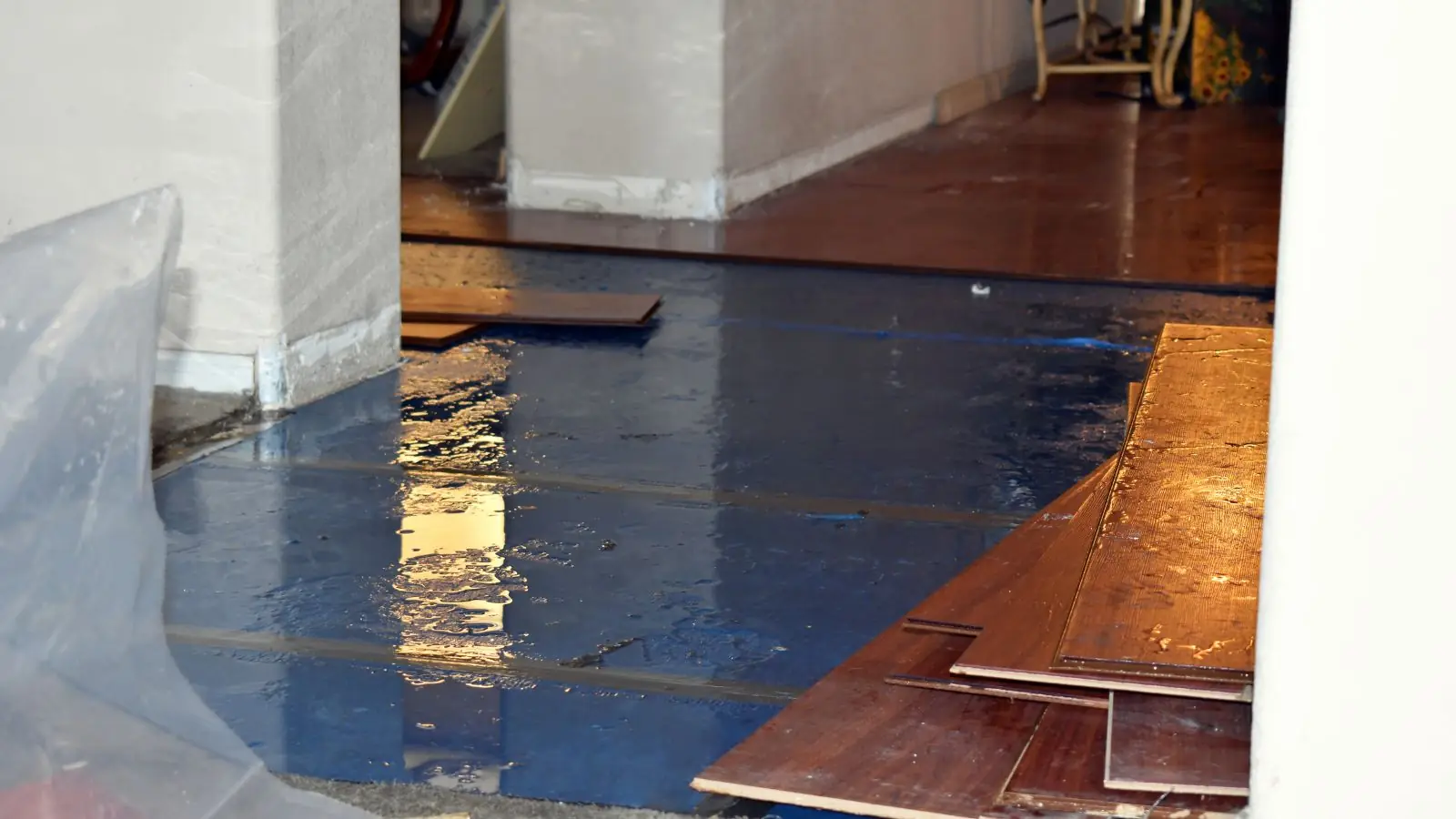
Cupping, crowning and what each one tells you
To fix a water damaged wood floor in a Moorpark home, you first need to read the shape of the boards. Cupping means the edges are higher than the center of each board, and it usually points to moisture arriving from below or to the underside absorbing more than the top. Crowning is the opposite, with a raised center, and it often shows up after a cupped floor is sanded flat while still damp.
A third and more serious condition is buckling, where boards lift off the subfloor. It signals that the floor expanded against its own perimeter or lost its bond. Mild cupping often relaxes on its own once drying is complete. Buckling and crowned sanding mistakes rarely do.
Three leaks that cause most Moorpark floor calls
Washer supply valve break
A burst hose or valve can run until someone finds it, and water spreads under the baseboards into the hall flooring. Shut the washer valves when you leave town, and use braided stainless hoses.
Dishwasher or ice-maker line
These are slow leaks. The first sign is often a spongy patch of floor in front of the sink or fridge, not a puddle. Pull the kickplate and look under the dishwasher.
Backed-up AC condensate line
A clogged line overflows the drain pan, then wets the ceiling or the floor below the air handler. The water is usually clean, which is a good sign for salvage, but it can run for weeks before anyone notices.
Slab or raised foundation: where the water goes
On a concrete slab, water that gets under a floor has nowhere to drain. It sits between the wood and the slab, and the slab can keep releasing moisture into the boards for a long time. Slab moisture tests, using calcium chloride kits or in-slab probes, tell you if it is safe to refinish.
A raised foundation behaves differently. Water can drip into the crawl space and the subfloor dries from below if vents are open and the soil is dry. The trade-off is hidden damage, since joists and plywood stay wet in the dark. A thermal camera and meter under the floor often matter more than anything you see on top.
Moorpark seasons and floor movement
The City of Moorpark reports an annual mean temperature of 60 degrees F, with annual lows near 49 and highs near 78. Humidity runs between roughly 42 and 68 percent over the year, with October highs of 75 percent. Hardwood expands and shrinks with those swings, so a floor that was installed tight in one season can cup or gap in another even without a leak. Rule out the seasonal cause before you assume a hidden one.
Rain is concentrated in winter, with 3.21 inches in January against 0.01 inches in July. A floor that cups after a wet January spell may be reacting to damp air or a slab that took on ground moisture, not to a leak. Take a moisture reading before you replace anything.
Floor lifting or cupping now?
Call before you sand. Nothing starts until the scope and price are laid out.
Glue-down, nail-down and floating floors react differently
| Installation | How water behaves | Usual outcome |
|---|---|---|
| Nail-down solid hardwood | Water enters seams and the underside, and boards swell sideways | Often dried in place if caught early. Rows that stay cupped are replaced |
| Glue-down engineered | Adhesive can release and trap water against the slab | Section lifted, slab dried and tested, new boards installed |
| Floating engineered or laminate | Edges swell at the seams and the core fibers fail | Usually replaced, since swelling in the core is not reversible |
| Plank over plywood subfloor | Both layers wet, and the plywood dries slowly | Boards dried first, plywood judged separately and sometimes replaced |
The common thread is the layer under the finish. Boards can look fine on top while the glue line or the plywood below is still wet.
Why sanding too early ruins a good floor
A cupped board is a wet board. Sand it flat while the core is still swollen, and the shape you grind away is the shape the board will want to return to when it dries. Crowned boards and open seams are the usual result.
A hardwood floor dries slowly and needs targeted equipment. Crews use mats or drying panels with controlled airflow, LGR dehumidifiers and moisture meters, and the floor often stays cupped for days while the readings drop. Wait until meters show the wood and subfloor have settled, then wait again for the boards to flatten before any sanding.
When boards are replaced
Replacement makes sense when boards are split or stained black, when the finish has delaminated across a wide area, or when the floor stays cupped well after the readings are dry. A few boards can be cut out and woven in. A whole room often needs a new floor because stain and sheen never quite match.
The repair itself belongs to a flooring contractor. Restoration crews dry the structure and remove what must go, and ask whether California licenses the flooring trade work you plan to hire. If you suspect growth under the boards, see mold remediation before sealing anything, and ask about water damage repair scope once the floor is dry.
Leak in your neighborhood or the next town
Appliance leaks happen in every housing type and every town. If you are calling from outside Moorpark, see the pages for Camarillo and Fillmore, and describe your foundation type when you call.
Why wood floors move: the published reference
The USDA Forest Products Laboratory publishes the Wood Handbook, and according to that standard public reference on moisture in wood, wood swells and shrinks as its moisture content changes. That is the mechanism behind cupping, crowning and gaps, so drying slowly and measuring first matters more than any finish.
A published reference explains the general behavior, but it cannot read your boards. A moisture meter on your own floor is what should drive the decision to sand, replace or wait.
Questions readers ask
Mild cupping often relaxes once the moisture source is gone and the floor has dried slowly. That can take weeks, and the floor should be monitored with a meter. If boards stay cupped after readings return to normal, sanding or replacement is the next discussion.
Surface readings can be misleading. A pin meter through the finish, in-slab probes on concrete, or a look under the floor from the crawl space show what the boards are sitting on. A thermal camera helps map the wet area before anyone pulls boards.
Often yes. Removing a baseboard or drilling small holes lets air reach the wall cavity and the edge of the floor. It is cheap to replace and cheaper than leaving the wall wet.
A clean supply line leak is usually Category 1, which makes drying and salvage more likely. The longer the water sits, the more its category drifts upward, and a slow dishwasher leak can reach Category 2 while hidden.
Yes. The crew explains what is dried, removed or left to a flooring contractor, and the scope and price come before work starts.