
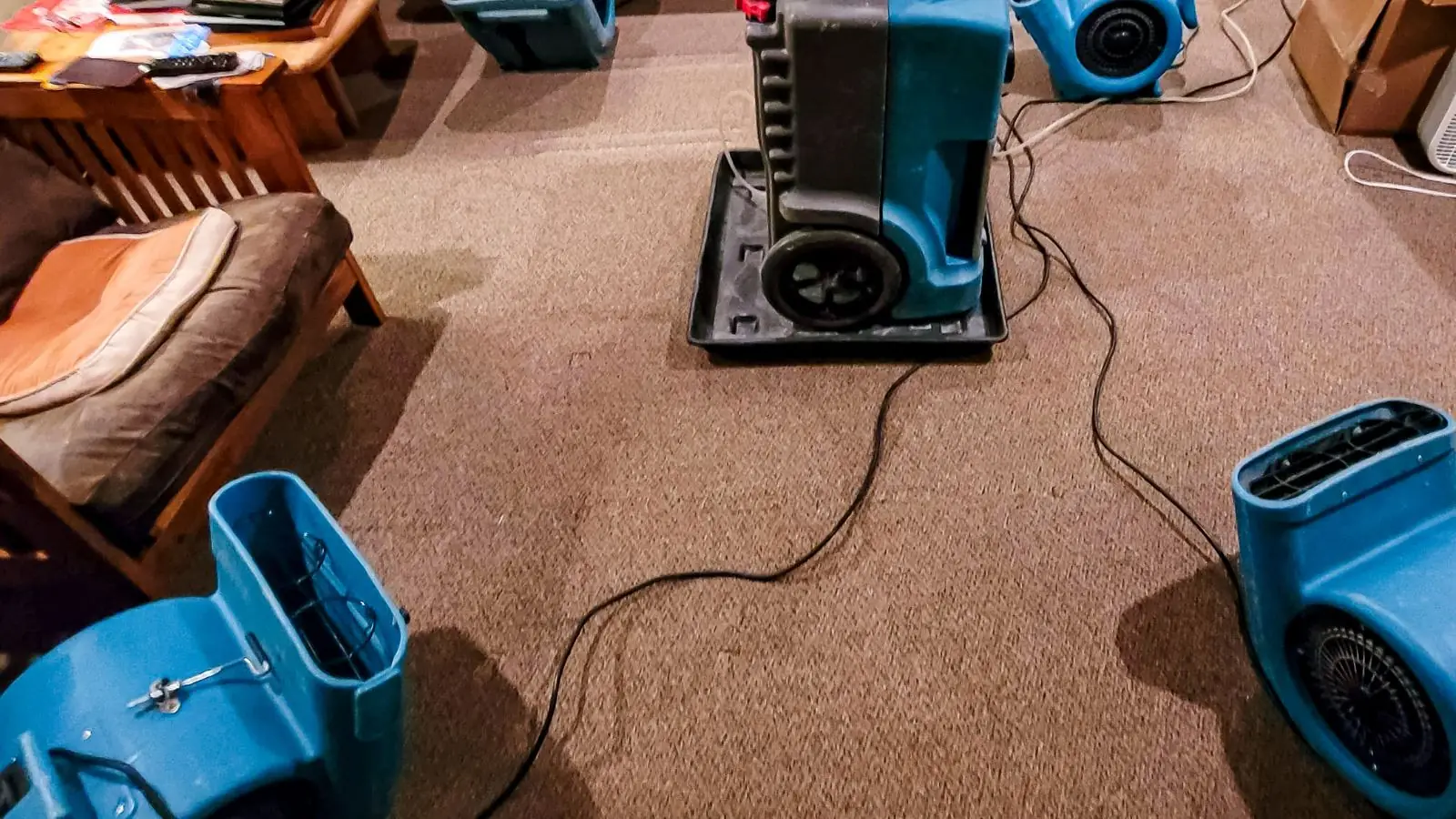
Extraction first, then drying
Water extraction and drying services in Moorpark do two separate jobs. Extraction removes liquid water. Drying removes the moisture that soaked into materials. Skipping the first makes the second slower and more expensive, because every gallon left on a floor has to evaporate into the air.
Truck-mounted units sit outside and run long hoses to pull large volumes through powerful vacuum and heat, which suits a flooded living room. Portable extractors go upstairs and into tight rooms. Weighted wands squeeze carpet and pad so water is lifted instead of just moved around. On a wet carpeted bedroom, a pass or two with a wand can pull out more water in minutes than a day of fans would evaporate.
The drying kit and what each piece does
Air movers
Low, directed fans that push air across wet surfaces and speed evaporation. Placement matters more than count, and a good crew aims them along walls and across floors.
LGR dehumidifiers
Low grain refrigerant units pull moisture out of the air so evaporation can continue. They work best when the air is warm enough, so cold rooms are often heated.
Desiccant dehumidifiers
These use a drying wheel instead of coils and can work in cool, damp conditions where refrigerant units lose efficiency. They are used selectively, not on every job.
Injection and panel drying
Small holes in a wall or baseboard let dry air flow into the cavity, and mat systems on hardwood floors pull moisture from under the boards. Used when tearing out would cost more than the drying.
Moisture meters
Probe and pin-less meters read moisture in drywall, wood and concrete. Readings are compared with dry reference materials from unaffected areas.
Thermal imaging cameras
A thermal camera shows temperature differences that suggest hidden moisture. It guides where to test, but it does not measure moisture and should be confirmed with a meter.
A day of monitoring, hour by hour in plain terms
Setup is the visible part, and monitoring is the part that decides the outcome. On each visit the technician records temperature and humidity inside and outside the drying area, then takes moisture readings at the same marked points as before. If readings flatten, equipment moves. If a wall stalls, a hole or removal may follow.
You should hear numbers. A good crew can tell you what the dry goal is for the wall, what today's reading was and what it was yesterday. If the answer is only that it is going fine, ask for the log.
A common mistake is pulling equipment on a fixed calendar day. Equipment should come out as areas reach goal. Drying often takes several days, longer for hardwood, plaster or concrete. A short quote that ignores what is inside the wall deserves a question, and so does a long one that cannot say why.
What Moorpark climate normals mean for drying
The City of Moorpark's climate page lists July rainfall of 0.01 inch, a mean of 71 F with a high of 86, and humidity between 38 and 50 percent. January shows 3.21 inches of rain, a mean of 49 F and humidity up to 70 percent. October peaks at 75 percent. Cool, damp months slow evaporation, so a winter job often needs more equipment hours than a July job.
Dry July air does not mean you can open the windows and walk away, because a wall cavity or subfloor dries on its own schedule, not the outdoor one. Warm July afternoons help evaporation, though air conditioning cycling can swing room humidity, while cool January rooms may need heat so dehumidifiers work well. Use these normals to set expectations, then rely on the meter readings from your own house.
How to judge a drying plan before work starts
- It begins with a moisture map showing which rooms and materials are wet, not just a count of fans.
- It states a dry goal, based on readings from unaffected materials of the same type.
- It explains why the equipment count suits the room, and what changes if readings do not fall.
- It names who comes back each day to read, record and adjust.
- It says which materials come out and why, and what stays and dries in place.
- It explains scope and price before work starts, and describes what would cause a change.
A plan that cannot answer these is an equipment drop, not a drying plan.
Want to ask about a drying plan?
Call 24/7. Scope and price explained before work starts.
Why one bedroom and one basement dry so differently
Materials hold water differently. Drywall dries fast once exposed, while hardwood, plaster and concrete release moisture slowly and can cup or crack if forced. Insulation and carpet pad hold water like sponges and are often removed outright.
Water category changes the plan as well. Clean supply-line water can often be dried in place, while sewage or flood water calls for removal of porous materials and cleaning first. The flood damage restoration page covers those jobs.
For a wet floor and walls after a plumbing failure, water mitigation is usually the service involved. For standing water that is still spreading, emergency water removal comes first.
Honest limits of the equipment
Drying cannot undo rot that began before the leak, fix a failed pipe or waterproof a foundation. It also does not repair finishes. Warped hardwood may need replacing even after the floor reads dry.
The same approach holds in Simi Valley and Thousand Oaks, where hillside homes and different construction change where the water goes but not how drying is measured.
What to do before the extraction crew arrives
Shut off the main water valve if a pipe is the source, and keep people and pets out of the wet area. Do not walk through standing water near outlets, and do not use a household vacuum on water. Cut power to wet rooms only if the breaker box is reachable from a dry spot.
Lift small furniture and electronics onto dry surfaces, photograph the water before anything moves, and write down the time you first noticed it. The published ANSI/IICRC S500 standard is the reference professional crews use for extraction and drying, so you can ask which parts of it apply to your job.
Questions readers ask
Usually not. Even when July humidity runs low, water inside wall cavities, pad and subfloor needs measured drying, and open windows give you no control or record. In January, with humidity as high as 70 percent on the city's normals, outside air can add moisture.
This service dispatches licensed and insured crews and does not offer equipment rentals. Household fans can help surface drying, but they cannot show what is happening in a wall or under flooring.
It depends on the materials, the water category, the season and the size of the area. Many jobs run several days, with daily readings deciding when equipment can come out.
Sometimes they let a crew dry a wall cavity or hardwood floor in place. If the material is contaminated or has already failed, removal is still the better choice. Ask the crew to explain which applies.