
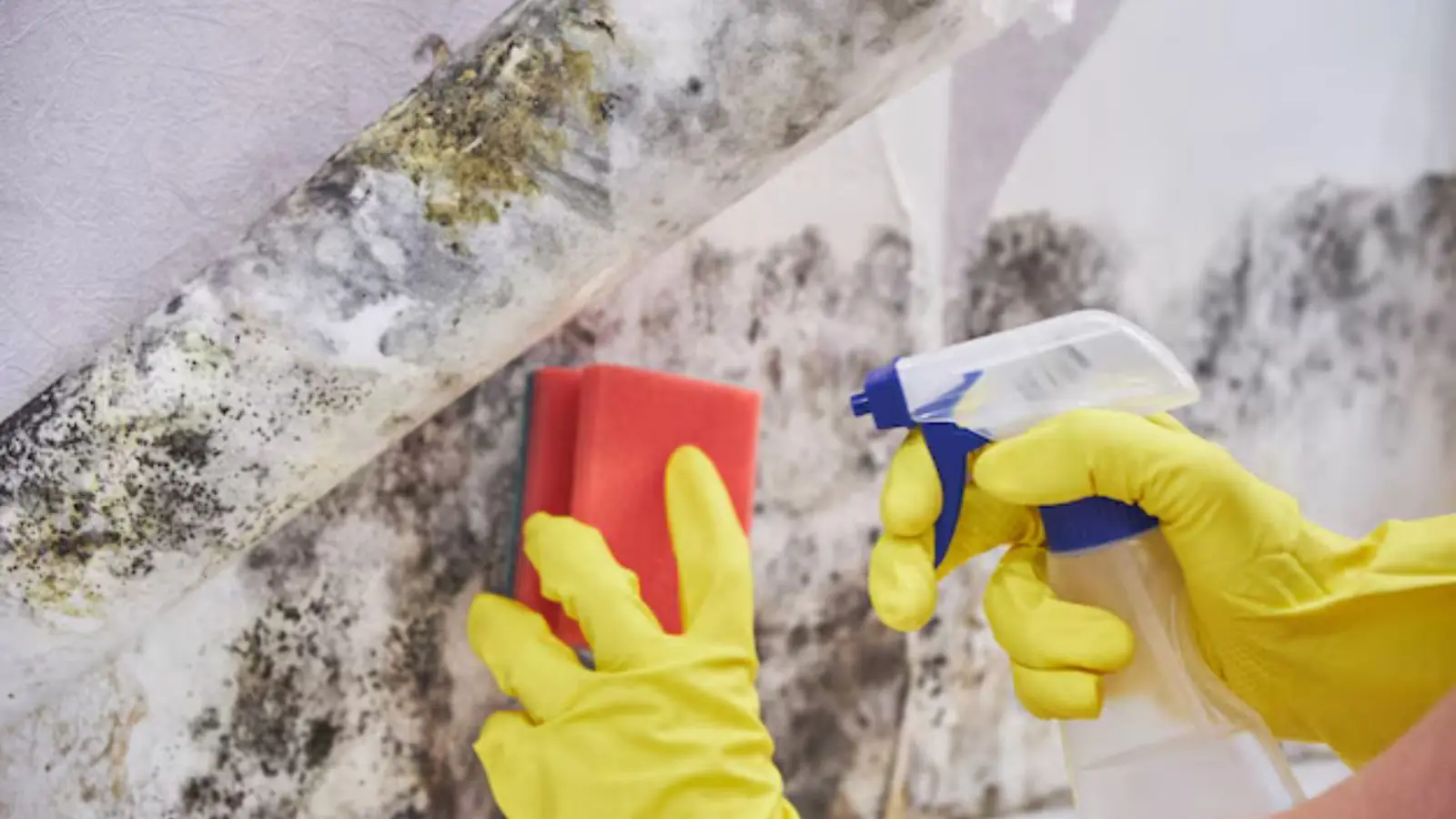
The word "permanently" hides three separate jobs
People in Moorpark, CA ask what kills mold for good, and the honest answer is that nothing you spray settles it. Mold spores are a normal part of outdoor and indoor air. What changes is whether a surface stays wet enough for them to grow.
So split the question in three. Killing means a product acts on the growth. Removing means the growth and the material it sits on leave the house. Controlling means the moisture is fixed and stays fixed. Most disappointment comes from paying for the first job and expecting the third.
Methods compared
This table covers what people actually reach for. It follows EPA and California Department of Public Health guidance where they speak to the method.
| Method | Works on | Limits |
|---|---|---|
| Detergent and water scrub | Hard, non-porous surfaces: tile, glass, sealed countertops, metal | Needs complete drying afterward. Does little for material the mold has grown into. |
| HEPA vacuum | Dust and spores on framing, hard surfaces and after material removal | Collects loose material only. It does not make a damp surface dry. |
| Household bleach | Non-porous surfaces at most | EPA does not recommend it as a routine step, CDPH does not recommend it at all. Never mix with ammonia. |
| Vinegar | Light surface cleaning on hard surfaces | The agency pages reviewed for this post do not endorse it as a mold treatment. Treat it as a cleaner, not a cure. |
| Antimicrobial products | Surfaces after cleaning, applied per the product label | Label limits apply: surfaces, contact time, ventilation. Does not replace removal. |
| Physical removal of material | Drywall, carpet, pad, ceiling tile, wet insulation | Costs more up front, and it is the only method that reliably deals with porous material. |
| Dehumidifying and drying | The whole room after the leak is fixed | Works only once the water source is stopped. |
Why bleach on drywall disappoints
Drywall is paper wrapped around gypsum, and paper is porous. A bleach solution is mostly water, so you are adding moisture to a material that already has too much. The surface may lighten, which looks like success, while the growth under the paper face is untouched.
EPA's cleanup guidance says absorbent materials such as ceiling tile and carpet may have to be thrown away if they become moldy, and that mold can be difficult or impossible to remove completely from them. When the material is the problem, no liquid applied to it changes that.
Moorpark humidity and what it means for your rooms
The City of Moorpark reports an annual humidity high of 68 percent and a low of 42, with a mean annual temperature of 60 F. The high end sits above EPA's 60 percent ceiling for indoor air, so a closed room can drift out of range on damp days even without a leak. A hygrometer in the bathroom and the garage-side rooms shows you which.
July rainfall in the city normals is 0.01 inches, so summer mold in Moorpark rarely comes from the sky. It comes from showers, cooking, laundry, irrigation near the foundation and AC condensate. When you hunt for the moisture source in a dry month, look inside the house first.
Dead mold is still there
Say a product does kill the growth on a wooden stud. The dead mold is still stuck to the wood, and it still stains. Killing without removing leaves residue behind and a surface that looks no better.
That is why remediation crews pair any antimicrobial with physical cleaning: HEPA vacuuming, damp wiping and removing what cannot be cleaned. If you have health questions about exposure, those belong with your physician and not with a product label.
Cleaned it twice and it is back?
That usually means the water is still there. Call and we will talk through where it might be coming from.
Moisture control is the lasting control
EPA's own phrase is that the key to mold control is moisture control. If you clean the mold and leave the water problem, the problem tends to return. Fix the plumbing drip, the roof leak, the AC condensate line or the shower caulk first.
Then dry things fast. EPA guidance says to dry water-damaged items within 24 to 48 hours and to keep indoor relative humidity below 60 percent, ideally 30 to 50. A hygrometer costs little and tells you whether a closed bathroom or spare room is drifting out of range. Run the bath fan during and after every shower.
Where a professional earns the call
Small hard-surface spots are usually fine to handle yourself with detergent, water and good drying. The call makes sense when the mold sits on drywall or insulation, when the area is large, or when you cannot find the water. A crew reads wall moisture with a meter and heat-sensing camera, builds containment, and removes what cannot be cleaned.
Ask any company whether its crews follow the published ANSI/IICRC S520 standard, and ask for the scope in writing. Our mold remediation page explains how that scope gets built, and our water mitigation work covers drying after a leak.
Questions readers ask
Not on its own. Outdoor dryness does not stop indoor moisture from showers, laundry, plumbing drips and AC condensate lines. Mold needs a wet or damp surface, and a closed bathroom or a leaking wall cavity can supply one in any month.
It is a common household cleaner, but the agency pages reviewed for this post do not endorse it as a mold treatment. It is fine as a mild cleaner on hard surfaces. For porous material, removal is the answer, and for a large area, call a professional.
No. Dead mold may still be present on the surface and needs to be removed. Clean the area, remove material that cannot be cleaned and dry everything thoroughly. Check any product label for the surfaces and conditions it covers.
A company that promises that is overreaching. Return depends on whether moisture comes back, and no crew controls your plumbing, roof or humidity. A fair scope fixes or flags the water source, removes damaged material and documents the drying.
If mold is visible or smells musty, testing usually adds little. EPA notes there are no federal limits set for mold or spores. Save sampling for cases such as a post-work check, and have a professional conduct it.